Ben Horowitz: What Makes a Great Founder
Ben Horowitz: What Makes a Great Founder
Guest: Ben Horowitz — Co-founder and General Partner, a16z Source: Ben Horowitz On What Makes a Great Founder | Duration: 49 minutes Full transcript: Complete transcript with speaker labels
Introduction
Ben Horowitz is one of Silicon Valley’s most influential venture capitalists. He co-founded a16z (Andreessen Horowitz) with Marc Andreessen in 2009, managing over $35 billion and backing companies like Meta, Databricks, Okta, and Coinbase. Before VC, he founded Loudcloud/Opsware and sold it to HP in 2007 for $1.6 billion. His 2014 book The Hard Thing About Hard Things became essential reading for founders.
The interviewer, Brian Halligan, brings matching operational credibility — he’s the co-founder and former CEO of HubSpot, growing the company from zero to a market cap exceeding $30 billion. Their conversation opens with an entertaining backstory: a16z passed on HubSpot’s Series D because Ben openly challenged their COO structure during the pitch.
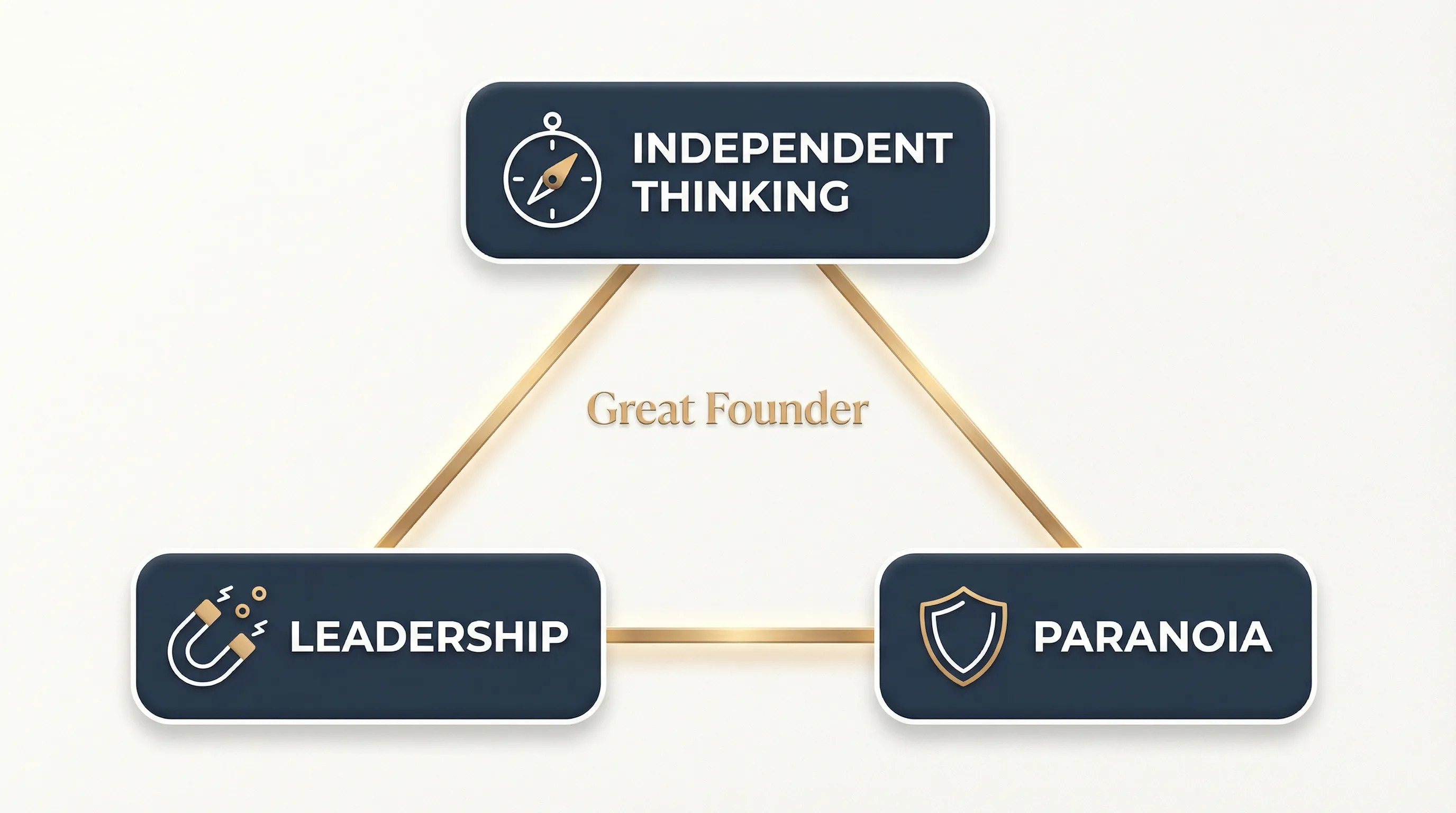
Three core takeaways from this conversation: the CEO filter isn’t IQ but a trifecta of independent thinking, go-to-market ability, and paranoia; decision debt can kill a company faster than technical debt; when hiring a head of sales, the less the candidate tries to please you, the more likely they’re worth hiring.
No Standard CEO Profile, But Three Common Traits
Halligan asks a direct question: you’ve invested in countless CEOs — what’s the filter?
Ben first rejects the idea of a “standard profile.” He says Mark Zuckerberg, Ali Gozi (Databricks CEO), and Elon Musk are completely different types of people. Any attempt to judge by appearance, personality, or extroversion-introversion spectrum is unreliable.
What he sees as genuinely shared are three things. First, independent thinking — you can spot it during a pitch: is this person reading the room and adjusting their message, or holding to their own judgment? Second, the ability to attract top talent. He cites Colin Powell’s definition:
Leadership is the ability to get people to follow you, if only out of curiosity.
Third is paranoia. He uses Ali Gozi as the example — PhD in computer science, exceptional go-to-market ability (beating Snowflake in enterprise software), and a near-Andy Grove level of paranoia. Ben believes this paranoia partly stems from Gozi’s refugee experience — fleeing Iran for Sweden, the experience of “losing everything” deeply shaped his psychology.
Halligan mentions that Sequoia partner Sean McGuire argued at an internal offsite that the best companies are founded by Math Olympiad or Chess Olympiad-caliber people. Ben’s response: extreme intelligence absolutely matters — Elon and Larry Page are proof — but “smart” doesn’t equal “Math Olympiad.” HubSpot was a marketing and sales-driven company that needed a different kind of smart, the kind that typically doesn’t win math competitions.
Decision Debt: The Hidden Liability More Lethal Than Technical Debt
Ben believes the most common founder failure mode comes down to one word: lack of confidence.
No founder knows how to be a CEO. You have an idea, hire people, and then start making mistakes. Those mistakes hurt the team, and you’ve never experienced this kind of pressure, so two dangerous reactions emerge.
The first is over-delegation. You hire smart people and start polling every decision, but no one other than the CEO has the full context. The result isn’t just bad decisions — it breeds a political environment. When a power vacuum appears, someone will always try to fill it.
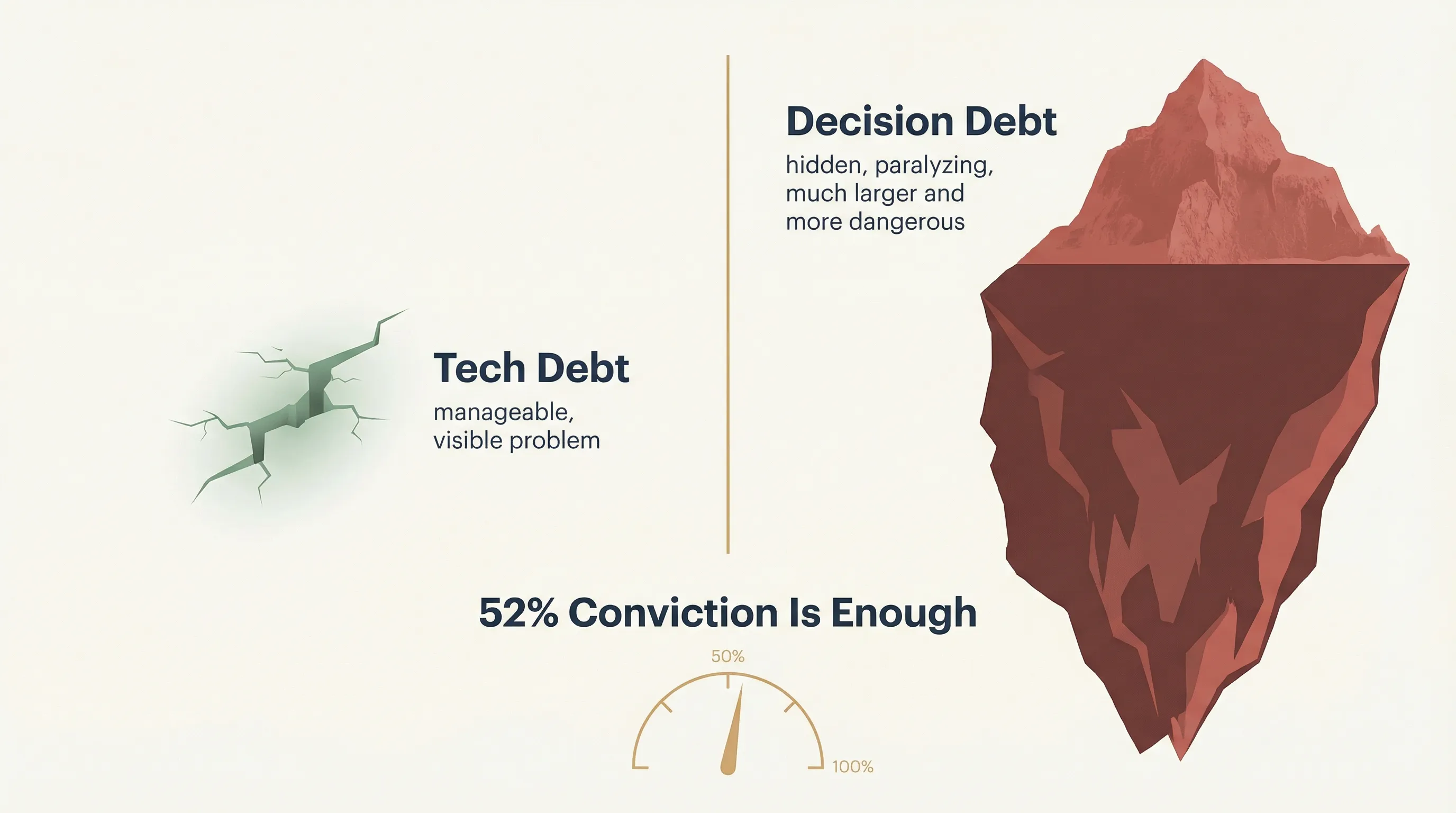
The second is hesitation. You’re 52% sure about something but choose not to decide because you’re afraid of being wrong. The classic scenario: you know the head of sales needs to go, but you worry about what the board will think, what the press will say — replacing the question you should be asking (can this person do the job?) with questions you shouldn’t.
Decision debt is the worst debt, because it paralyzes a company.
Ben uses an NFL analogy: if you’re a linebacker with great speed but you don’t trust your reads, you’ll get cut — you’ll never reach the ball carrier in time. Same for CEOs: don’t trust your judgment and charge at the problem, you’ll fail.
Halligan immediately confirms he fell into this trap. HubSpot accumulated all kinds of debt — culture debt, product debt — but the worst was decision debt. His pattern: the company slows down, his desk piles up with unresolved issues, then every four or five months he’d erupt — make a batch of decisions and everything would start flowing again. The cycle itself was the problem.
Executive Hiring: Don’t Interview a Japanese Interpreter When You Don’t Speak Japanese
Ben believes executive hiring is where founders have the highest error rate, for a simple reason: you don’t actually know what the role is.
His analogy: hiring an executive is like interviewing a Japanese interpreter when you don’t speak Japanese — everyone sounds pretty good, and you can’t tell the difference. The fix is extensive preparation: have you talked to enough CEOs about this role? Do you understand what separates a good CFO from a great one? If possible, act in the role yourself for a period.
When the topic turns to hiring a head of sales, Ben zeroes in on the core challenge facing engineer-founders — cultural mismatch.
If you ask an engineer a question, 100% of them will try to think of the correct answer. If you’re a salesperson, your first thought isn’t “what’s the answer?” — it’s “why the fuck are you asking me that question?”
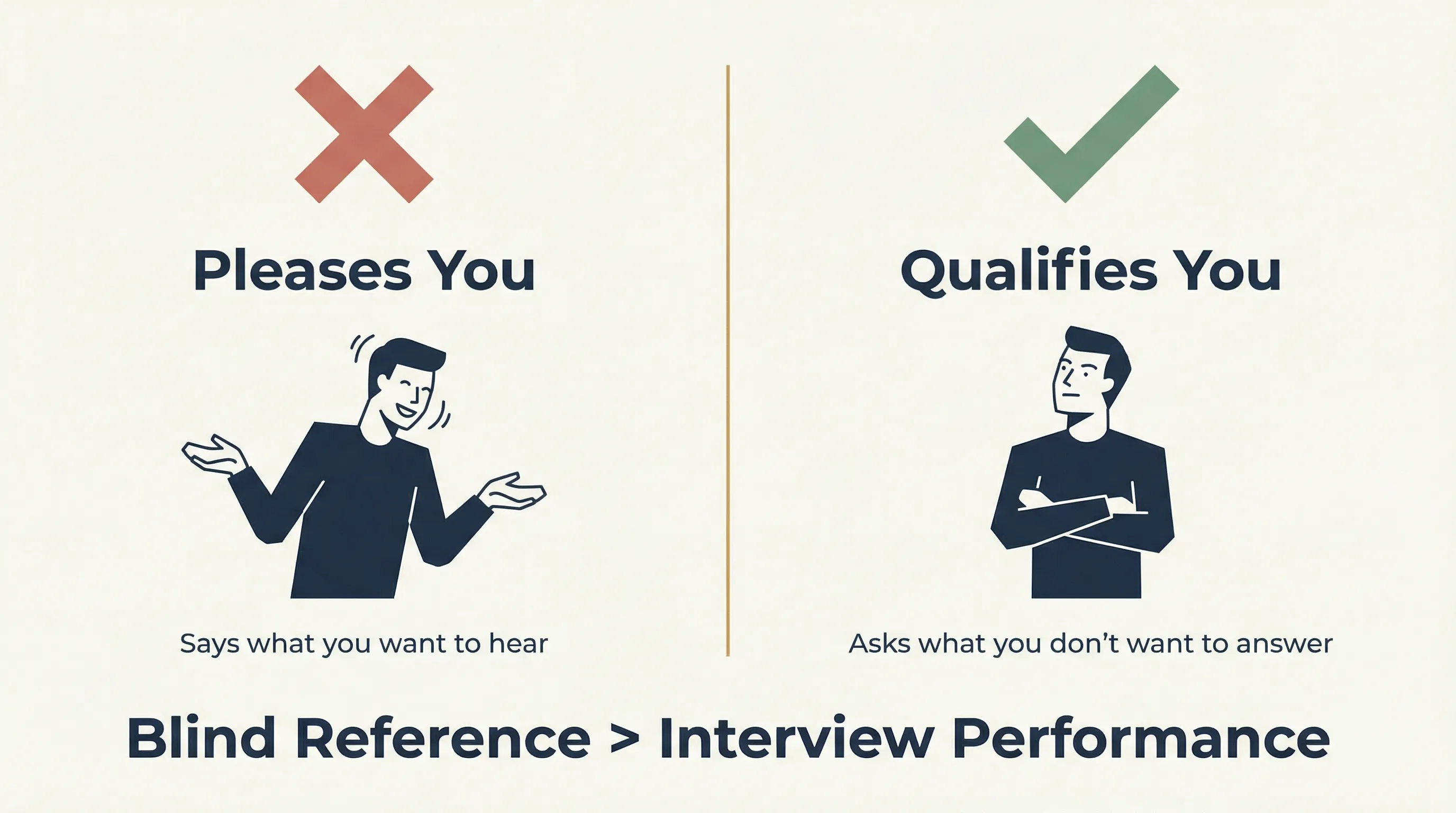
This gap directly distorts interview judgment. Good sales candidates will qualify you during the interview — is your company legit? Are customers actually buying? This behavior makes engineer-founders uncomfortable because they expect direct answers. The result: truly capable candidates get rejected because you don’t like them, while the ones who are bad at the job get hired because they’re pleasant.
He tells the Okta story. CEO Todd McKinnon was torn between two candidates: one was enthusiastic about Okta, the other was Adam Aarons, a PTC veteran who was cool and detached, wanting to talk to customers before committing. Todd leaned toward the enthusiastic one. Ben ran blind references (bypassing candidates’ own references to directly ask people in the industry), and Adam’s reviews far exceeded the other candidate’s. He told Todd: “If this hire doesn’t work, your company is done.” Todd ultimately chose Adam, Okta went on to IPO with a market cap exceeding $40 billion at its peak. Ben believes the other candidate would have killed the company.
Two actionable takeaways: first, blind references matter more than anything; second, ask candidates “who are you bringing with you?” — great sales leaders always have followers, and leaders without followers usually aren’t great.
The PTC Sales System: Why “Hard to Sell” Is an Advantage
The conversation spends significant time on PTC — one of the most successful enterprise software companies of the 1990s, selling CAD/CAM and PLM software to manufacturers. PTC alumni later spread across Silicon Valley, what Ben calls the “PTC Mafia.”
Ben points to a counterintuitive fact: PTC’s product wasn’t that good, but that’s exactly why it produced elite sales talent. Anyone can sell a great product. Only truly exceptional people can consistently win when the product is mediocre.
PTC’s sales discipline manifested in: systematically laying traps for competitors before entering an account; building comprehensive technical and business cases; mapping the complete decision chain within an organization and ensuring every key person was aligned. This discipline required immense courage, effort, and competitive drive, making it transferable to any context.
He uses Databricks’ early head of sales, Ron Gabrisko, as an example. Gabrisko previously worked at a public company Ben had never heard of — selling secure FTP. A public company surviving on FTP sales — imagine how good that sales leader had to be. This kind of discipline, forged by a tough environment and paired with sharp intelligence, is what Ben says he wants “all day long.”
He articulates a key distinction: are you the person who wrote the playbook, or the person who ran someone else’s playbook? A VP who joined VMware at its peak may have just executed an existing script. What you want is the person who designed the sales methodology from scratch when the product was hard to sell and the brand had no halo.
Halligan adds HubSpot’s sales hiring profile: second sales job (not first, not fifth), decent state school with a B average, competitive athlete background. The interview process was dead simple — give the candidate 12 minutes to sell HubSpot on the spot, then deliver feedback, and see if they improve on the second attempt. People who quickly absorbed feedback succeeded 99% of the time. The core metric wasn’t talking ability — it was listening ability.
Blunt Culture: Bad News Must Travel Faster Than Good News
Halligan reads aloud an email from Marc Andreessen to Ben. The backstory: during Ben’s Loudcloud era, the company had a major product launch planned, but Marc preempted it by talking to press. Ben sent a passive-aggressive email. Marc’s reply:
“Apparently you don’t understand how serious the situation is. We’re getting killed, killed, killed out there. Our current product is radically worse than the competition. We had nothing to say for months. As a result, we’ve lost over $3 billion in market cap. Next time, do the fucking interview yourself. Fuck off, Marc.”
Ben says Marc was wrong on that particular issue — he (Ben) was right. But what matters is that Marc could say it, and Ben could take it. Otherwise the truth doesn’t surface.
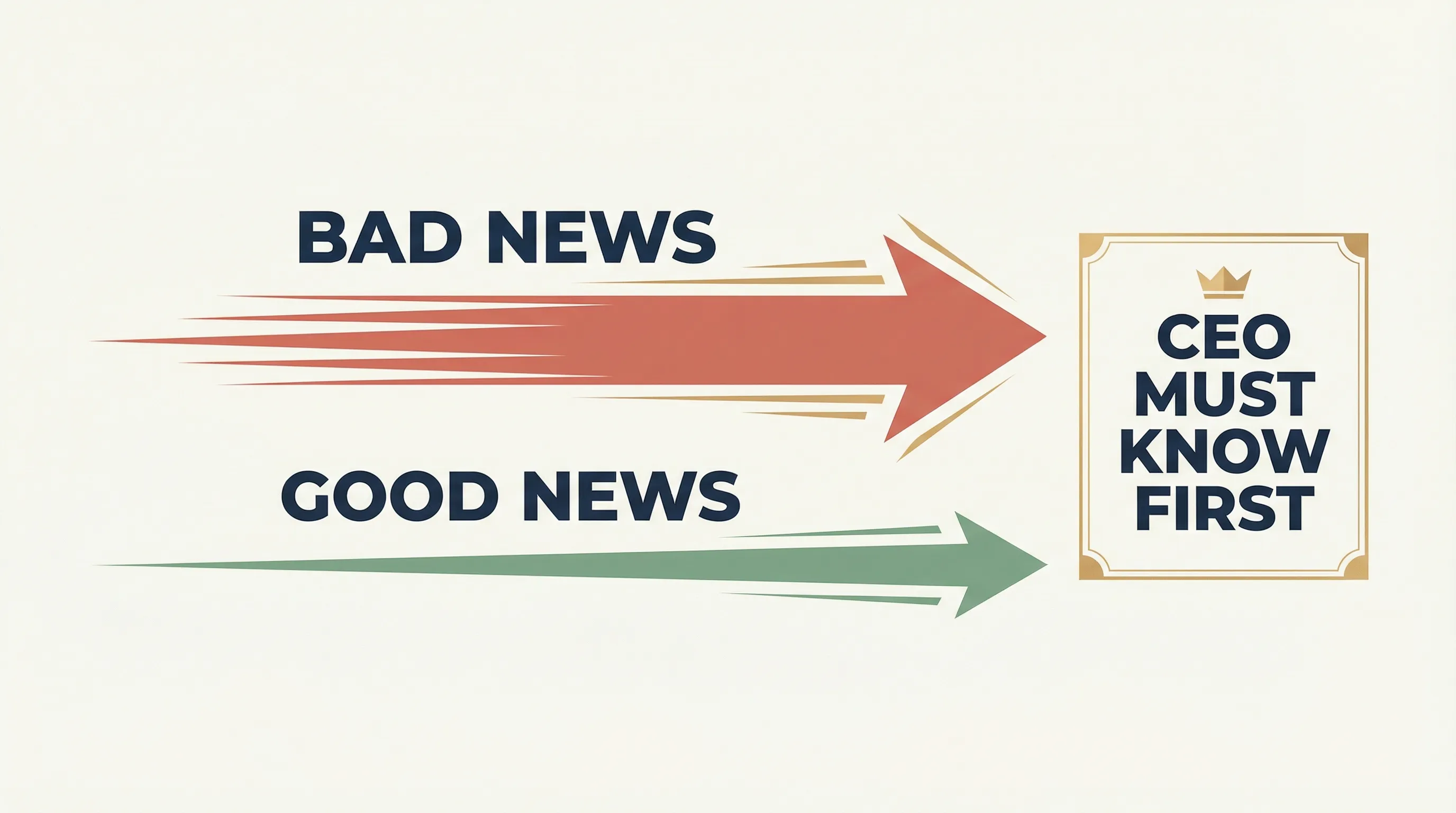
He believes the best companies share a culture of bluntness. Zuckerberg and Larry Page reached the mountaintop with directness as a core trait. Avoiding truth to protect feelings is extremely dangerous in a tech company. The corollary: bad news must travel fast. The CEO must be the first to know when something is wrong.
Andy Grove called this “constructive confrontation.” Ben shares a Grove story: someone arrived late to a meeting, and Grove said, “All I have in this life is time, and you’re fucking wasting it.” That line might have crushed one person’s feelings, but the story spread through Intel — all the way to Ben, who never worked there. That’s a culture anchor: “We don’t show up late here” doesn’t need to be written in a handbook. One story is enough.
Halligan offers self-reflection in his closing remarks: his biggest bug as HubSpot CEO was being conflict-averse. Many first-time founder CEOs share this flaw, especially those who’ve never managed people before. He says he’s borrowing Ben’s term — constructive confrontation — to recalibrate his own behavior.
Correcting Founder Mode: It’s Not About Not Hiring — It’s About Being Able to Manage
Ben holds a partially agreeing stance on Paul Graham’s Founder Mode memo.
He agrees with the origin story: Brian Chesky (Airbnb CEO) hired a batch of senior executives and over-delegated, spawning fiefdoms and politics. Post-COVID, Chesky took the company back with a more dictatorial approach, and the company improved.
He disagrees with how the concept has been pushed to extremes. Many founders now say “I don’t want to hire any senior people,” but if you need to build a global sales organization, growing someone from scratch means paying them to learn things — territory planning, international expansion, pipeline management — that you could buy off the shelf today.
He notes that Jensen Huang has 60 direct reports and gives feedback publicly, but Jensen has been doing this for 30 years. Elon didn’t start with his current confidence level either. Zuckerberg once delegated half the company to Sheryl Sandberg until he gradually built his own confidence on the operations side.
CEOs can’t really develop executives. They either can do it or they can’t.
Ben’s core point: the correct interpretation of Founder Mode isn’t “don’t hire senior talent” — it’s “you need the capability and confidence to manage them, not let them tell you what to do.” The gap between these two positions is one many founders haven’t yet crossed.
Culture Isn’t a Slogan — It’s the Specific Thing You Cannot Do
Halligan asks Ben — you wrote an entire book on culture (What You Do Is Who You Are). What’s the biggest misconception?
Ben’s answer: most people don’t know what culture actually is. They think culture is values — “we have a culture of integrity,” “we have each other’s backs.” But every company’s values are the same. They’re just platitudes.
Culture is actually behaviors. The question is: to become the kind of company you want to be, what specifically must you do and not do? “Treat the company’s money like your own” sounds nice, but if you don’t specify what hotel to stay at, what class to fly, the phrase is empty.
He uses a16z’s own example. Every VC says “we love entrepreneurs,” but entrepreneurs’ actual experience is: many VCs are arrogant, condescending, check their phones during pitches, and never respond after passing. If you genuinely respect entrepreneurs, define the behaviors: show up on time for pitch meetings, don’t check your phone, respond if you’re not investing.
For high-performing but difficult people, Ben explicitly rejects the “no-asshole rule.” He considers such vague rules unenforceable. The specific rule he established at a16z:
You can’t make yourself look smart by making somebody else look dumb. That doesn’t count here.
If someone publicly mocks an entrepreneur’s business model on Twitter — fired, immediately. But you can’t say “don’t be an asshole” because extremely smart people genuinely won’t tolerate inefficient conversations, and that’s different from “being an asshole.” The key is drawing specific behavioral boundaries, not applying vague labels.
He and Halligan discuss the Steve Jobs case: was Jobs cruel to people because genius inevitably manifests that way, or because he was a genius and people tolerated it? Ben leans toward the latter. The conclusion: if you’re not Jobs or Elon, imitating their management style may just drive talent out the door.
Not Knowing What You’re Doing Is Normal for a CEO
Near the end, Halligan asks a personal question: “When you were CEO, what percentage of the time did you feel like you didn’t know what you were doing?”
Ben says Loudcloud went public when it was only 18 months old — that forces rapid growth. But it took him roughly three and a half to four years before he felt like he truly knew what he was doing — after rebuilding the sales force and bringing in Mark Cranney. Even then, his confidence level was nowhere near what it is now.
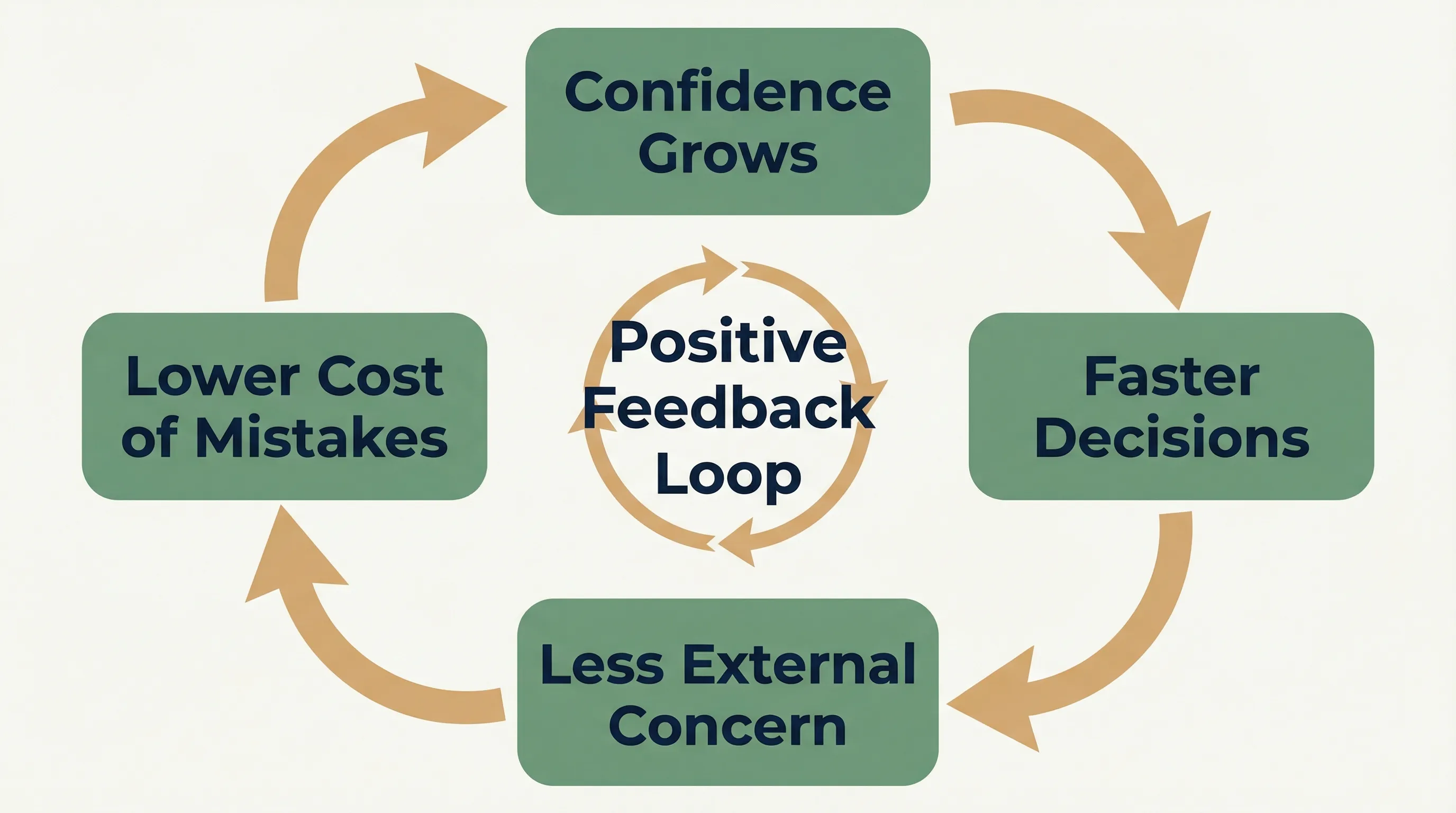
He describes a positive feedback loop: the more confident you are in your judgment, the faster you decide; the faster you decide, the less you care what people think; the less you care about external opinion, the lower the psychological cost of mistakes. Jensen Huang and Elon Musk look like “masters of the universe” not because they were born that way, but because they’ve accumulated decades of reps.
Halligan’s closing monologue summarizes his takeaways. Being a CEO is uncomfortable, especially at hypergrowth companies — everything is breaking, everything is changing. If you feel like you don’t know what you’re doing, Ben didn’t know what he was doing, and neither did Halligan. It’s the normal state, not a bug.
He also honestly assesses the difficulty gap between entrepreneurship and venture capital: “Entrepreneurship — you have one shot and you have to make it work. VC loses money, there are other companies in the portfolio. The pressure level isn’t even close.”
Editor’s Analysis
Positional Bias
Ben Horowitz is a co-founder and general partner at a16z. His advocacy for hiring senior executives, building sales systems, and valuing external expertise aligns closely with a16z’s post-investment value-add model. One of a16z’s core competitive advantages is connecting portfolio companies with networks of experienced talent. Ben’s critique of Founder Mode (“it’s not about not hiring”) can also be understood from this angle: VCs need founders to remain open to external talent.
Selective Argumentation
The success stories in this conversation — Okta, Databricks — are both a16z portfolio companies. PTC’s sales culture is presented in a highly positive light, though Ben himself acknowledges “that culture would almost certainly be illegal today.” The conversation doesn’t discuss cases where senior executive hires failed, nor does it mention CEO replacements or failures within the a16z portfolio.
Counterpoints
Paul Graham and Y Combinator represent an alternative path: small teams, young founders, rapid iteration. Under this model, prematurely hiring senior executives could be a burden rather than an asset. SpaceX and Tesla’s track record partially validates aggressive Founder Mode — Elon deeply engages in frontline decisions across many domains, with significant results. Additionally, HubSpot itself used a COO structure (JD Sherman) and still reached a $30 billion market cap, creating an interesting contrast with Ben’s anti-COO stance from that era.
Claims to Verify
- Ali Gozi’s academic background (described as PhD in Computer Science; public records indicate UC Berkeley EECS PhD)
- Adam Aarons’ PTC background and tenure at Okta
- The source for Jensen Huang’s 60 direct reports claim
- Whether Loudcloud’s IPO actually occurred 18 months after founding
Key Takeaways
- Decision debt is more urgent than technical debt. If your desk is piled with “let’s wait and see” decisions, that’s not caution — it’s the precursor to paralysis. 52% conviction is enough to decide
- Understand the role before hiring for it. Talk to 5 people who’ve done the job, and if possible, act in the role yourself first. Don’t interview a Japanese interpreter when you don’t speak Japanese
- The less a sales candidate tries to please you, the more they may be worth hiring. Good salespeople qualify you, not flatter you. Run blind references and ask “who are you bringing with you?”
- Culture rules must be specific behaviors, not abstract values. “You can’t look smart by making others look dumb” is enforceable. “Don’t be an asshole” is not
- Not knowing what you’re doing is normal. Ben Horowitz took four years to feel like he knew the basics. Confidence takes time — don’t disqualify yourself because you’re “not enough like Jensen”
If you found this helpful, consider buying me a coffee to support more content like this.
Buy me a coffee