CZ (Changpeng Zhao): From Immigrant Teen to Crypto Empire — A New Beginning After 4 Months in Prison
Guest: CZ / Changpeng Zhao, Binance Founder Hosts: Jason Calacanis, Chamath Palihapitiya, David Sacks, David Friedberg Duration: 1 hour 57 minutes Source: All-In Podcast Full Transcript: Complete transcript with speaker identification
From Immigrant Teen to Wall Street Coder
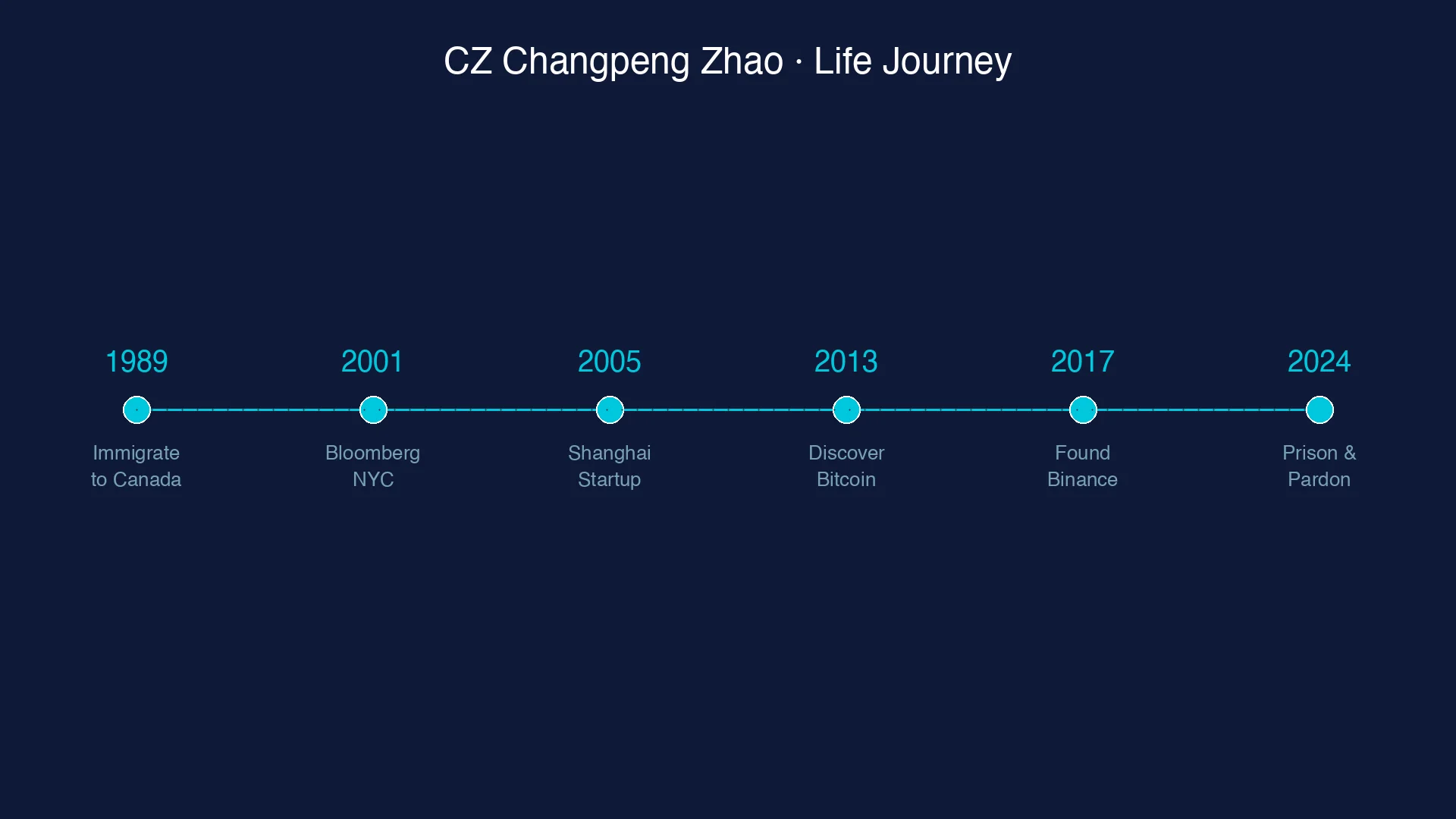
In 1984, CZ’s father left China for the University of Toronto as a visiting scholar, earning CA$1,000 a month as a teaching assistant. Five years later, 12-year-old CZ and his mother finally got their visas, and the family reunited in Vancouver. His mother had been a math and history teacher at the University of Science and Technology of China. In Canada, her English wasn’t fluent enough for professional work, so she took a minimum-wage job at a sewing factory — and stayed there for seven or eight years.
CZ started working at McDonald’s at 14. Chamath mentioned on the show that he’d done the same thing at Burger King at the same age — two immigrant kids with strikingly similar starting points. CZ worked every summer through college and graduated with zero student debt. He then wrote trade matching systems at a small firm in Tokyo before spending four years at Bloomberg in New York doing exactly the same work — building order execution software for exchanges.
“Canada is great. You can get an education without being crushed by debt.”
Nothing in this stretch hints at “future billionaire.” CZ himself admits he had no entrepreneurial ambitions at the time — just a quiet programmer writing code to make trading systems faster. But that code would later become the genetic blueprint for Binance’s matching engine.
Eight Years in Shanghai: From Financial IT to Discovering Bitcoin
In 2005, CZ and five friends quit their Wall Street jobs and moved to Shanghai to start a financial IT company. The original idea was to bring Wall Street trading technology to the Chinese market, but the company quickly pivoted to a generalist IT outsourcing model — building whatever systems clients needed. The company survived eight years. CZ poured most of his savings back in and never cashed out a dime.
One evening in 2013, a friend told him: “You should look into this thing called Bitcoin.” CZ recalls that once he started studying Bitcoin, it took about six months to truly understand it. Chamath jumped in to mention he’d written a Bitcoin explainer for Bloomberg back in 2012 — one that was called “one of the most elegant non-technical Bitcoin primers ever written.”
“Everyone who gets into Bitcoin feels like they’re late. Every person you talk to bought earlier than you.”
Bitcoin went from $70 in mid-2013 to $1,000 by year’s end. Watching that curve, CZ made a career-level judgment: he had encountered three fundamental technologies in his lifetime — the internet, mobile, and Bitcoin. He’d missed the window on the first two. On the third, he decided to stop watching from the sidelines.
All In: Selling Everything to Bet on Crypto
At 35, CZ sold his Shanghai apartment and converted everything into Bitcoin. This wasn’t a modest “allocation” — it was All In in the most literal sense. He then joined OkCoin as CTO, where he gained hands-on experience running an exchange. But cultural friction pushed him out quickly, and he started Bijie Tech, an “exchange-as-a-service” software company that built crypto exchanges for clients on a fixed monthly fee.
Within two years, Bijie Tech had about 30 exchange clients. Then in March 2017, the Chinese government shut down most crypto exchanges, and Bijie Tech’s customer base vanished overnight. By May, CZ faced a choice: shut down, or get in the game himself.
He chose to do an ICO. Leveraging the reputation he’d built in the crypto community, Binance’s ICO attracted roughly 20,000 buyers. CZ says he had some name recognition in the space — his stints at OkCoin and Blockchain.info meant “people in the circle” knew who he was. But by any conventional standard, this was an unknown person doing something unprecedented.
Binance Is Born — And Explodes
In September 2017, China imposed a blanket ban on crypto exchanges. Binance was forced overseas, and the entire team relocated to Tokyo. CZ says they barely spoke Japanese, but they liked Tokyo. BNB (Binance Coin) offered a 50% discount on trading fees — a simple economic model that became the core engine of early user growth.
Chamath raised a key question on the show: was Binance’s success about timing, or product? CZ’s answer was blunt: product-market fit.
“When we launched Binance, the product-market fit was just there.”
He added that Binance’s matching engine was genuinely faster and more stable than competitors — the result of a decade spent writing trading systems in Tokyo and New York. But he also acknowledged that the 2017 crypto market was in a frenzy, and almost any functioning exchange could attract users. Binance’s edge was that it didn’t just function — it held up under traffic spikes.
From launch to becoming the world’s largest crypto exchange by trading volume, Binance took less than six months. By the time Forbes named CZ the wealthiest person in crypto, his net worth exceeded $30 billion.
A Functionally Driven Billionaire
After appearing on the Forbes cover, CZ was asked what wealth had changed. His answer was unexpectedly flat.
“I’m a functionally driven person. If something works, I’m happy.”
He says he doesn’t live lavishly, but lives comfortably. No designer brands, no yachts. Asked whether he’d ever felt insecurity or ego, he said “no.” His emotional range, he explained, is narrow — highs aren’t too high, lows aren’t too low. “That allows you to manage a lot of things.”
Jason pressed: were you ever addicted to growth? CZ paused, then said the satisfaction from the work itself is hard to describe. He believes that as long as you keep creating value for users, growth is a natural result. The answer was both sincere and evasive on the core issue — during the fastest growth years, Binance’s compliance infrastructure lagged far behind its business expansion.
The Regulatory Storm: $4.3 Billion Settlement
In 2019, Binance registered Binance US as a U.S. entity. CZ says this was because he saw BitMEX and Bitfinex being pursued by the U.S. government and realized Binance needed a compliant American operation. But the relationship between Binance’s global platform and Binance US remained perpetually murky.
CZ had been an early investor in FTX, holding roughly 20% equity before exiting. He says he “wanted multiple successful exchanges in the industry so Binance wouldn’t always be the target.” On FTX’s collapse, he chose his words carefully, saying only that the compensation plan was “not ideal for some holders.”
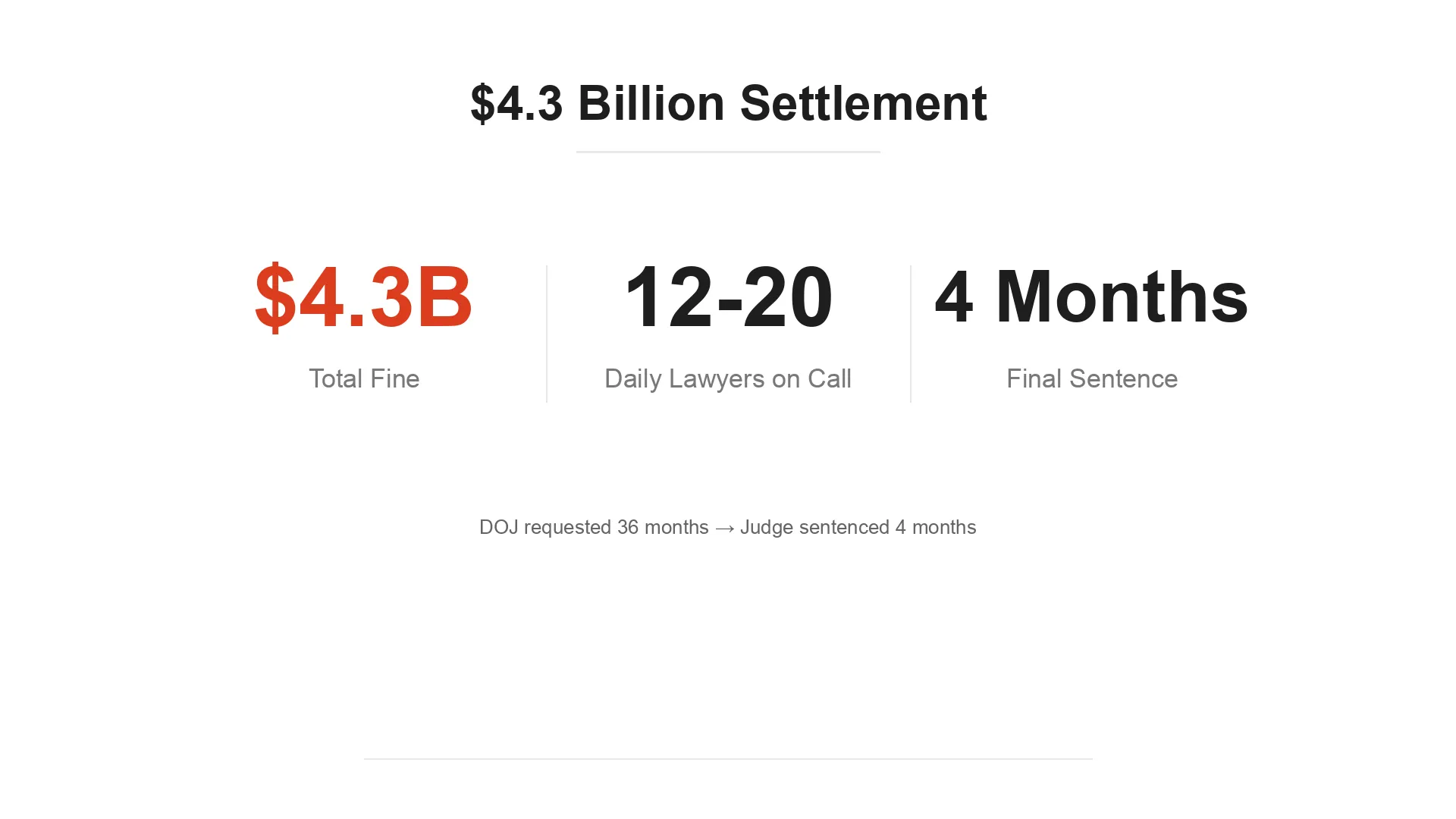
The DOJ investigation evolved into a negotiation marathon lasting over a year. CZ says 12 to 20 lawyers were on calls every day. The core dispute had four layers: the first was that Binance hadn’t registered for KYC requirements; the second was weak anti-money laundering systems; the third and fourth were the DOJ’s attempts to prove that CZ personally “facilitated” illicit transactions.
CZ accepted the first two charges but firmly denied the latter two. He said he “didn’t handle any transactions” and never had direct access to Binance’s backend customer data. The court ultimately dismissed both aggravated charges.
“The negotiations went on for over a year, with 12 to 20 lawyers on the line every day. You don’t get used to something like that.”
The settlement: $4.3 billion — one of the largest corporate criminal penalties in U.S. history. CZ himself faced a guilty plea and sentencing.
Four Months in Prison: Seeing America from the Inside
CZ flew to Seattle for the plea proceedings. His mother, sister, and adult children were with him, but he didn’t bring the younger kids. Then came the waiting. The judge agreed to let him return to the UAE on bail pending sentencing, but prosecutors took the unusual step of appealing the bail conditions — CZ’s lawyer said he’d never seen such an appeal in forty years of practice. Two weeks later, the appeal was upheld, and CZ was kept in the United States.
Five days before sentencing, Senator Elizabeth Warren went on television to “declare war on crypto” and wrote a public letter demanding harsh punishment. The DOJ’s sentencing recommendation was 36 months — double the top of the sentencing guidelines. CZ’s lawyers warned that the judge would likely “split the difference.”
On April 30, 2024, the judge read a lengthy positive assessment of CZ, then said “however.” The final sentence: 4 months.
CZ was sent to a 2,200-inmate low-security federal prison. He says he was supposed to go to a minimum-security facility typically reserved for white-collar offenders, but because he wasn’t a U.S. citizen, he was assigned to a low-security facility populated mostly by drug offenders. The prison was managed along racial lines — Asian, White, Black, and Latino inmates each grouped together. CZ was placed in a six-person “pan-Asian” group led by a Filipino-German man nicknamed “Chino.”
“The first thing after getting out was taking a proper shower — you never have to touch the walls again. And fruit. I hadn’t seen a whole piece of fruit in months.”
Four months later, CZ got from the prison gate to a plane in 26 minutes. He hadn’t seen his children in a year and flew straight to the UAE.
Pardon and a New Chapter: Giggle Academy
Leaving Binance was part of the plea agreement. CZ says it was the only time he cried aside from his father’s death. But after getting out, he found he was “actually pretty happy not to be running Binance anymore.”
“If I had resigned on my own, people would say I’d lost my drive. But it wasn’t my choice — and that actually freed me.”
The pardon process, as he describes it, was almost without a “process.” He had his lawyers draft a petition and submit it to the White House pardons counsel Alice Johnson (who had herself served years in prison), and then he waited. CZ believes Trump’s own experience — being charged with 34 criminal counts by Biden’s DOJ — gave the president a visceral understanding of “prosecutorial overreach,” which may have contributed to the pardon.
The commercial implications of the pardon are clear: as Binance’s ultimate beneficial owner (UBO), without the pardon, Binance could not formally enter the U.S. market. If America wants to be the “crypto capital of the world,” it can’t lock out the world’s largest liquidity pool.
CZ’s current daily life: running the free education platform Giggle Academy, advising multiple governments on crypto regulation, making blockchain and AI investments through YZi Labs, and mentoring founders in the BNB Chain ecosystem.
Giggle Academy was born from a set of numbers: globally, 700 to 800 million adults are illiterate, two-thirds of them women; another roughly 500 million children are out of school. That’s 1.2 billion people — 13% of the world’s population. CZ believes a single mobile app can deliver gamified, comprehensive primary education for free. He explicitly refuses to issue a token for Giggle because “the moment you have a token, everyone only cares about the token price, and I can’t tell apart kids who are actually learning from speculators farming points.” The project has received $12 million in community meme coin donations, while total expenditure has been only about $3 to $4 million.
AI Agents and the Next Decade of Crypto
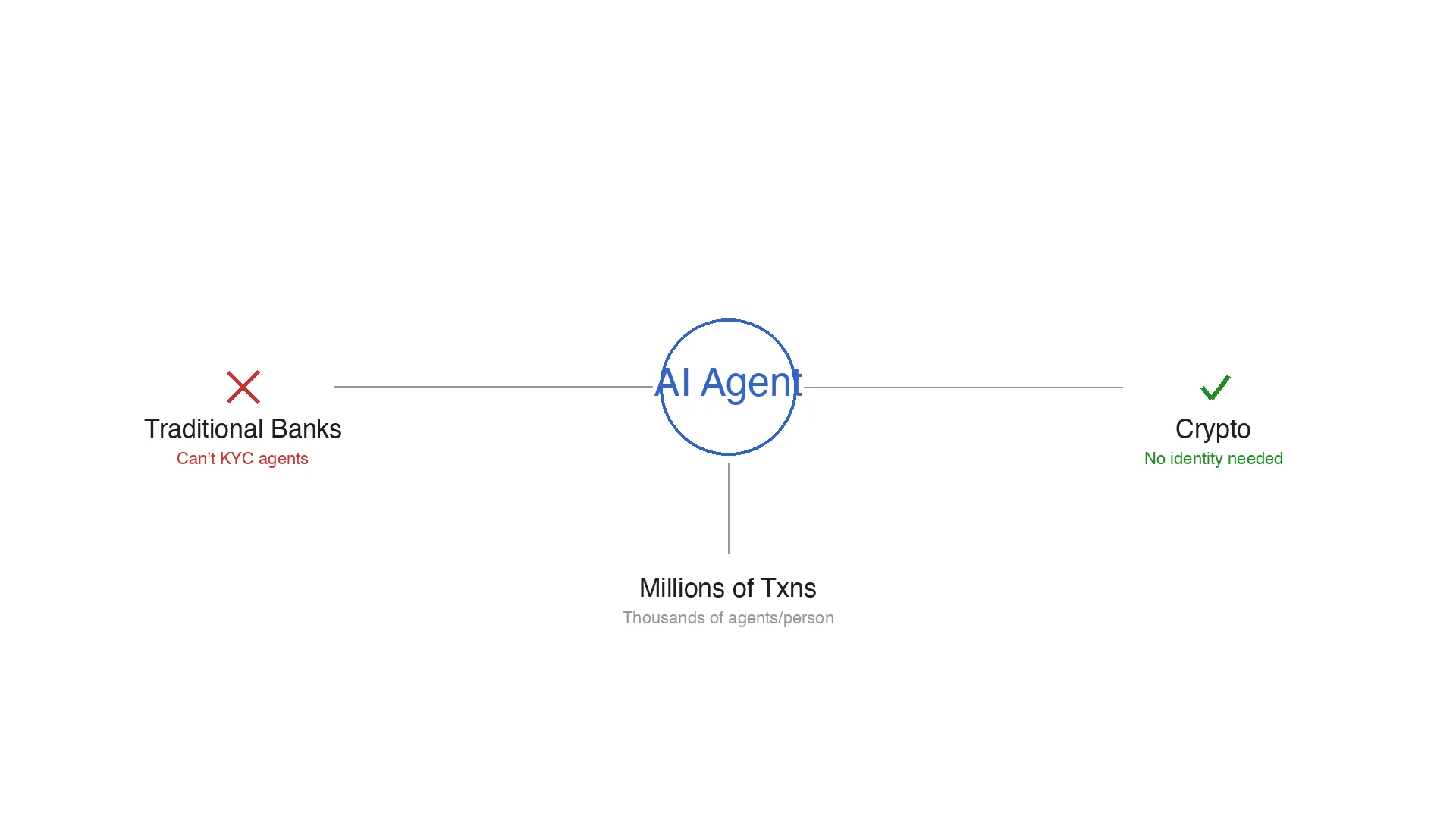
Chamath steered the conversation toward AI. He pointed out that when you drill down to the embedding layer of large language models, you find a machine-readable language far richer than English — a natural operating interface for AI agents. Agents are participants in commercial activity. They need the ability to pay.
CZ picked up the thread:
“Soon, each of us will have hundreds, thousands, even millions of agents working in the background. They’ll trade and transfer money. But they won’t use banks. Banks simply can’t handle that scale. You can’t KYC an agent. They can’t swipe a card.”
The argument is logically sound: agents transact at frequencies and volumes far beyond human capacity, and traditional payment infrastructure can’t keep up in terms of throughput or identity verification. But when David Friedberg pressed on which crypto project is best suited for agent payments right now, CZ admitted he “wasn’t really sure,” saying only that “quite a few people are working on it.”
More noteworthy was CZ’s assessment of Bitcoin’s privacy problem. He said Bitcoin was originally designed to be “semi-anonymous,” but on-chain transactions are fully traceable, and combined with centralized exchange KYC, privacy is essentially nonexistent. He gave an example: if you book a hotel with Bitcoin, the receiving address is exposed on the blockchain, and anyone can figure out where you’re staying — a physical safety issue.
“Privacy is probably the biggest thing holding Bitcoin back from mass adoption.”
This is a self-critical judgment from the founder of Binance and the largest holder of BNB. He acknowledged that privacy coins exist but said their market cap is too small and their impact too limited. “As an industry, we need to figure out how to evolve privacy features. But almost no one is seriously working on this right now.”
The Spider Web Graph of Life
CZ is writing a 95,000-word book. It started because he was bored in prison and began typing on a crude terminal. He sent drafts to his assistant through the prison system and continued editing bilingual versions — Chinese and English — after his release. He says the point of the book is to “get the story straight” — about who he is, about Binance’s full arc, and so his children can understand details he never had time to explain in person.
At the end of the show, Jason asked CZ what he hopes for his kids. He said the education his parents gave him was extremely simple: “Don’t hurt yourself, don’t hurt others.” He wants to give his children the same freedom.
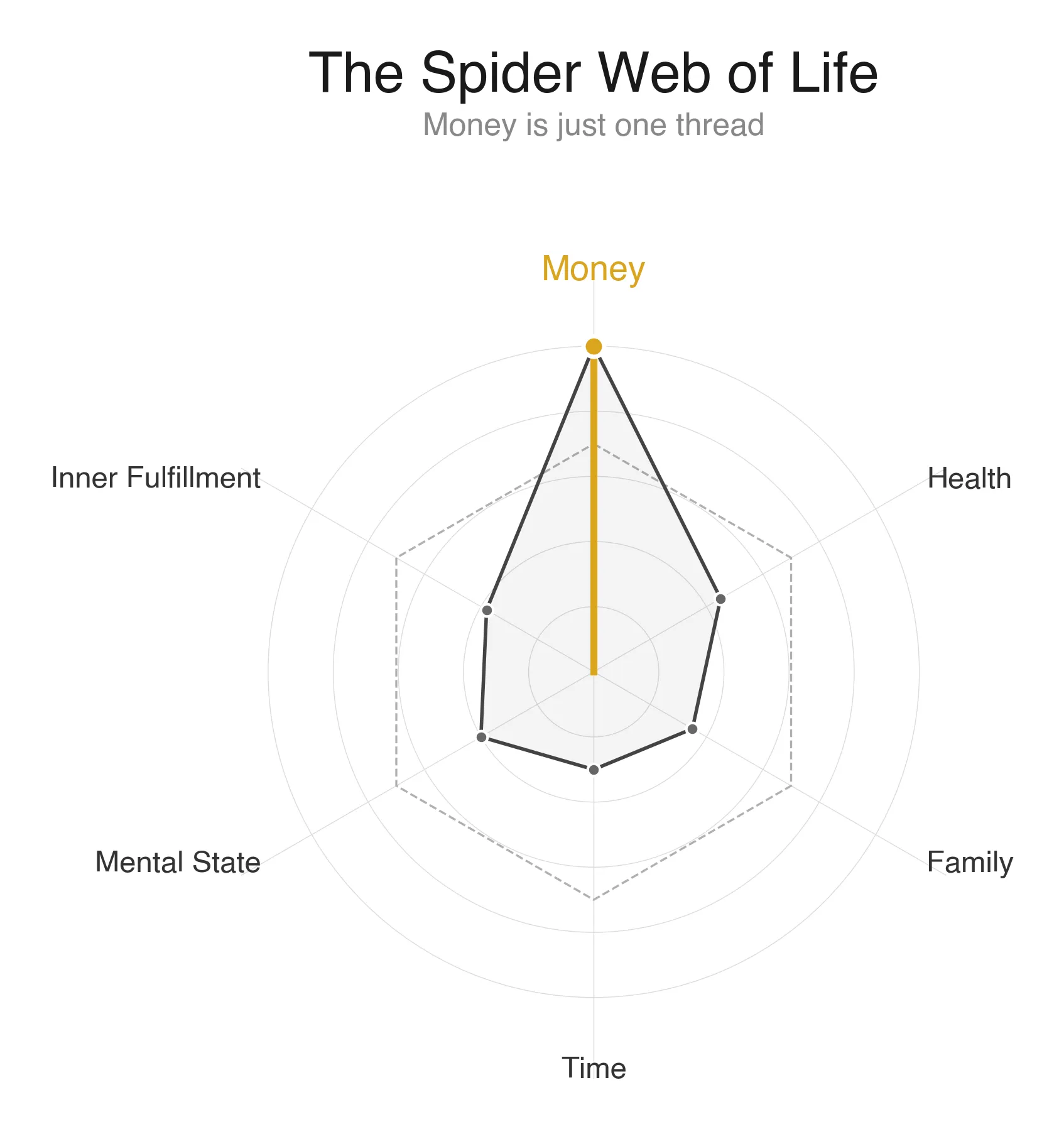
On success, CZ drew a spider web graph — money is just one strand, and once you have enough, more doesn’t help. Health, family, time, mental state, inner fulfillment — each strand can be improved. Many people chase only the money strand and sacrifice every other dimension.
“Money is just one line on the spider web graph. More of it won’t make you happier.”
He says he’s “not particularly smart,” but success doesn’t require being particularly smart. Push a little harder each day — 110%, 120%, 130% — at an intensity you can sustain for thirty years. With some luck, you’ll most likely end up living comfortably. “You probably won’t become a billionaire, but you’ll do just fine.”
Editor’s Analysis
Guest’s Position
CZ entered this interview wearing three overlapping hats: Binance founder and largest BNB holder, recently pardoned former federal inmate, and soon-to-be author. Every hat points in the same direction — constructing a favorable public narrative. He needs the crypto industry to look legitimate, his own experience to look like “systemic overreach” rather than “systemic corporate noncompliance,” and to pave the road for Binance’s re-entry into the U.S. market.
Selective Framing
CZ’s narrative strategy is worth unpacking. He spent nearly 30 minutes on his immigrant background and early working-class years — which resonated with Chamath’s similar experience and effectively built a “regular guy” persona. But someone on the Forbes cover with a net worth exceeding $30 billion is, by definition, no longer a regular guy.
On the $4.3 billion fine, CZ’s emphasis fell on the DOJ’s “overreach” — the bail appeal, Elizabeth Warren’s public pressure campaign, the 36-month sentencing request. These details may all be true, but they sidestep a core fact: $4.3 billion is one of the largest corporate criminal penalties in U.S. history, and the scale alone indicates the violations were not trivial. CZ says he “didn’t handle any transactions,” but as CEO and UBO, he bore management responsibility for the company’s systemic KYC/AML deficiencies — precisely the core logic of the DOJ’s prosecution.
On FTX, CZ mentioned Binance’s early investment and exit, hinting at foresight. But he didn’t disclose the timing or reasons for the exit in detail. Notably, Binance’s large-scale FTT token sell-off is widely considered one of the catalysts for FTX’s liquidity crisis.
Counterpoints
On regulation: The DOJ and SEC’s position is that Binance systematically evaded anti-money laundering compliance requirements — not merely a “registration issue.” The $4.3 billion settlement was not the result of political persecution but punishment for quantifiable violations. CZ’s plea agreement was the result of negotiation with prosecutors; he voluntarily admitted to the core charges.
On AI agent payments: Traditional payment infrastructure (Visa, Mastercard, Apple Pay) is rapidly API-ifying. Agents don’t need to “swipe a card” — an API call completes the payment. Crypto’s advantage in agent payments is not irreplaceable.
On Giggle Academy: The hard part of a free education platform isn’t the technology — it’s content quality and localization. CZ’s $3–4 million in spending is vastly out of scale with the 1.2-billion-person education problem. Whether the project can move beyond “founder’s side project” status remains to be seen.
Facts to Verify
- CZ’s claim that “no one in U.S. history has gone to prison for KYC/AML violations alone” — requires legal expert verification
- Arthur Hayes (BitMEX) was actually sentenced to 6 months of house arrest plus 2 years of probation; CZ mentioned only the first part
- Exact timing of Elizabeth Warren’s public letter (CZ says 5 days before sentencing, i.e., around April 25, 2024)
- Binance ICO attracted roughly 20,000 participants — verifiable through on-chain data
- 700–800 million illiterate adults globally — roughly consistent with UNESCO data (~770 million)
Key Takeaways
- Immigration shaped the foundation: Immigrating at 12, working at 14, a mother who went from professor to seamstress — CZ’s resilience and pragmatism have clear origins
- A decade of coding was the hidden advantage: Binance’s matching engine speed and stability trace back to CZ’s ten years building trading systems in Tokyo and New York
- All In was not a metaphor: He sold his Shanghai apartment and went all-in on Bitcoin — a decision made at 35, not 25
- The $4.3 billion settlement is a two-sided story: CZ emphasizes DOJ overreach, but the sheer scale of the fine speaks to the systemic nature and severity of the violations
- 4 months served vs. 36 months requested: The judge dismissed two aggravated charges, resulting in a sentence far below the prosecution’s ask
- The pardon has clear commercial logic: As the world’s largest crypto exchange, Binance cannot formally enter the U.S. market without a pardon for its UBO
- Privacy is CZ’s biggest concern about Bitcoin: A self-critical judgment from an industry insider, worth taking seriously
- The spider web graph philosophy: Money is just one dimension — health, family, time, and inner fulfillment matter equally
This article is based on the All-In Podcast interview transcript. The original video was published on YouTube. Views expressed are the guest’s own; the editor’s analysis section is independent commentary. Full transcript: All-In Podcast: CZ Interview Transcript
If you found this helpful, consider buying me a coffee to support more content like this.
Buy me a coffee