"Dumb Apps" Are Making People Rich — Three Patterns from Starter Story's Founder
Pat Walls spent seven years turning a side project — interviewing founders — into a company that got acquired by HubSpot. Starter Story’s model was simple: interview founders doing $10K-$100K/month and share their real stories. This gave Pat a massive sample size: 12 deep conversations with founders every single week.
On this episode of My First Million, Pat shared three patterns he’s extracted from thousands of founder interviews: iOS “dumb apps” are printing money at scale, B2B video is a massively underestimated opportunity, and systems-based operations can make a small company run without its founder. He also shared his personal turning point — a 2020 blog post titled “I Am My Own Greatest Obstacle,” and his decision to sell everything else and go all-in on Starter Story while living at his mom’s house.
Guest: Pat Walls, Founder of Starter Story (acquired by HubSpot) Host: Shaan Puri, My First Million podcast Duration: 47 minutes Source: YouTube

12 Founder Calls a Week — Half Are Building iOS Apps
Pat made it clear: this isn’t a trend he picked up on Twitter or got from ChatGPT. It’s what he sees when he talks to 12 founders every week.
“When I talk to 12 founders a week, I’m seeing six of them are crushing it with iOS apps. This is where this is coming from.”
He gave several examples. Push Scroll is an app that blocks your social media until you do pushups. Your phone camera uses AI to verify you’re actually doing them. It’s making over $30,000 a month — and Pat hinted the real number is much higher.
There’s a similar app that requires you to pray before you can open TikTok. Shaan’s reaction: “Just like God intended.”
Another case: Puff Count, an app that gamifies quitting nicotine by tracking how many puffs you take daily. It sold for a significant sum. Shaan joked: “Who bought it? Philip Morris? Shut that thing down?”
These apps share one trait: they all sit in health, wealth, relationships, productivity, or self-improvement. Pat’s point is that the apps look silly, but the categories are deadly serious — don’t let the word “dumb” fool you.
Video First, Code Second
Pat shared a strategy that stuck with him: Push Scroll’s founders didn’t build the app first.
They shot a viral video pretending the app already existed — someone doing pushups with their phone propped up, as if the app was monitoring them. They made similar videos for other app concepts. Only Push Scroll went viral. Then they built it.
“They reversed the whole process. Imagine creating 10 apps and having none of them work. That would take you a year. Or creating one video in one day and having it work — that takes one day.”
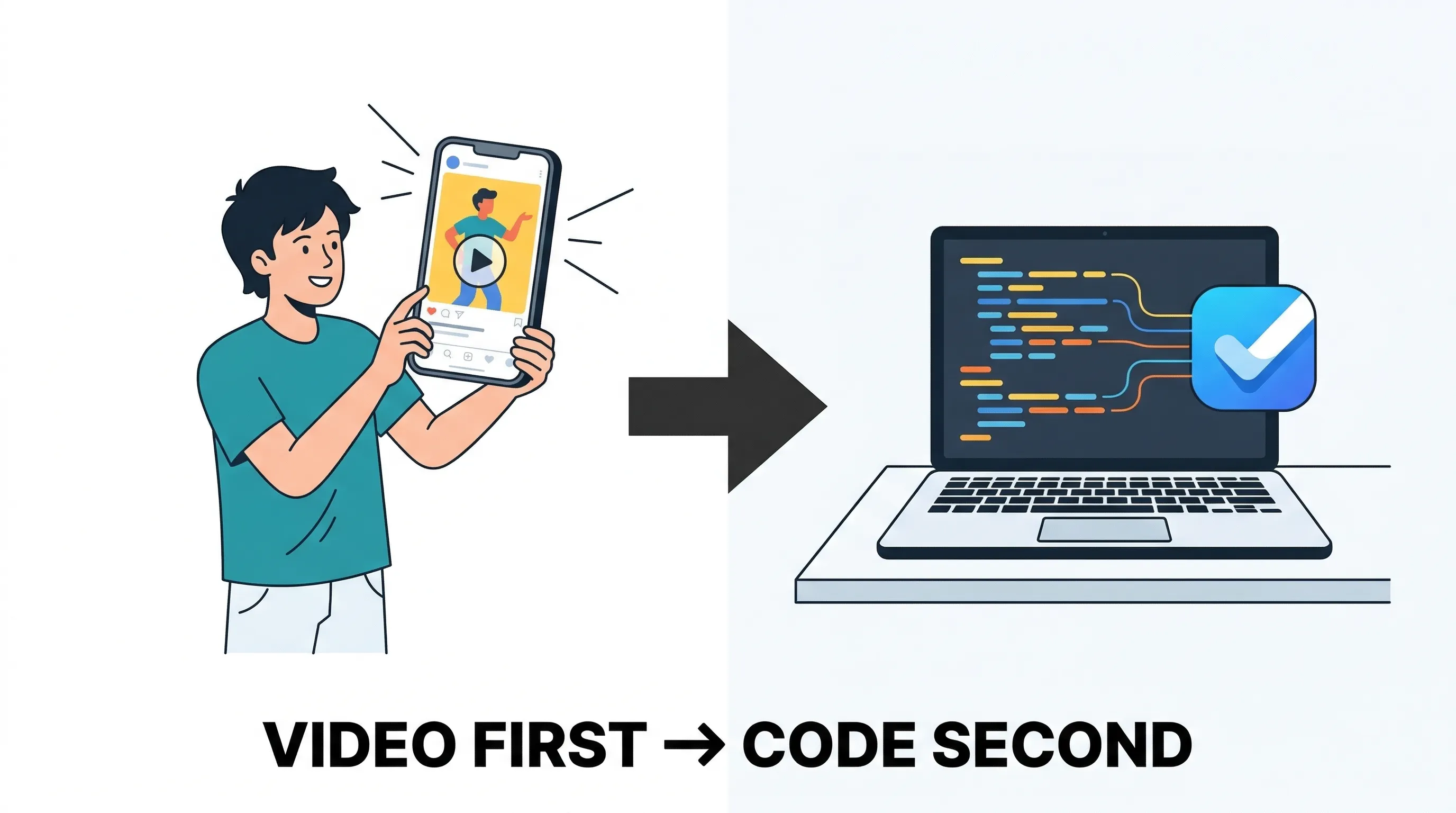
This “validate with video, then build the product” approach is what Pat considers the right way to do consumer apps now. The traditional path — idea, team, development, launch, marketing — has costs at every step and often leads to something nobody wants. Video validation costs almost nothing.
TikTok is the key distribution channel. These apps don’t grow through App Store search rankings — they grow through TikTok content networks. Founders either make content themselves or pay influencers who create their own hooks: “I haven’t touched Instagram all week because of this app” or “Where did these gains come from? Instagram. Wait, what?”
AI Coding Makes Zero-Team Apps Possible
Pat pointed to another driver behind this iOS app wave: AI coding tools (he used the term “vibe coding”).
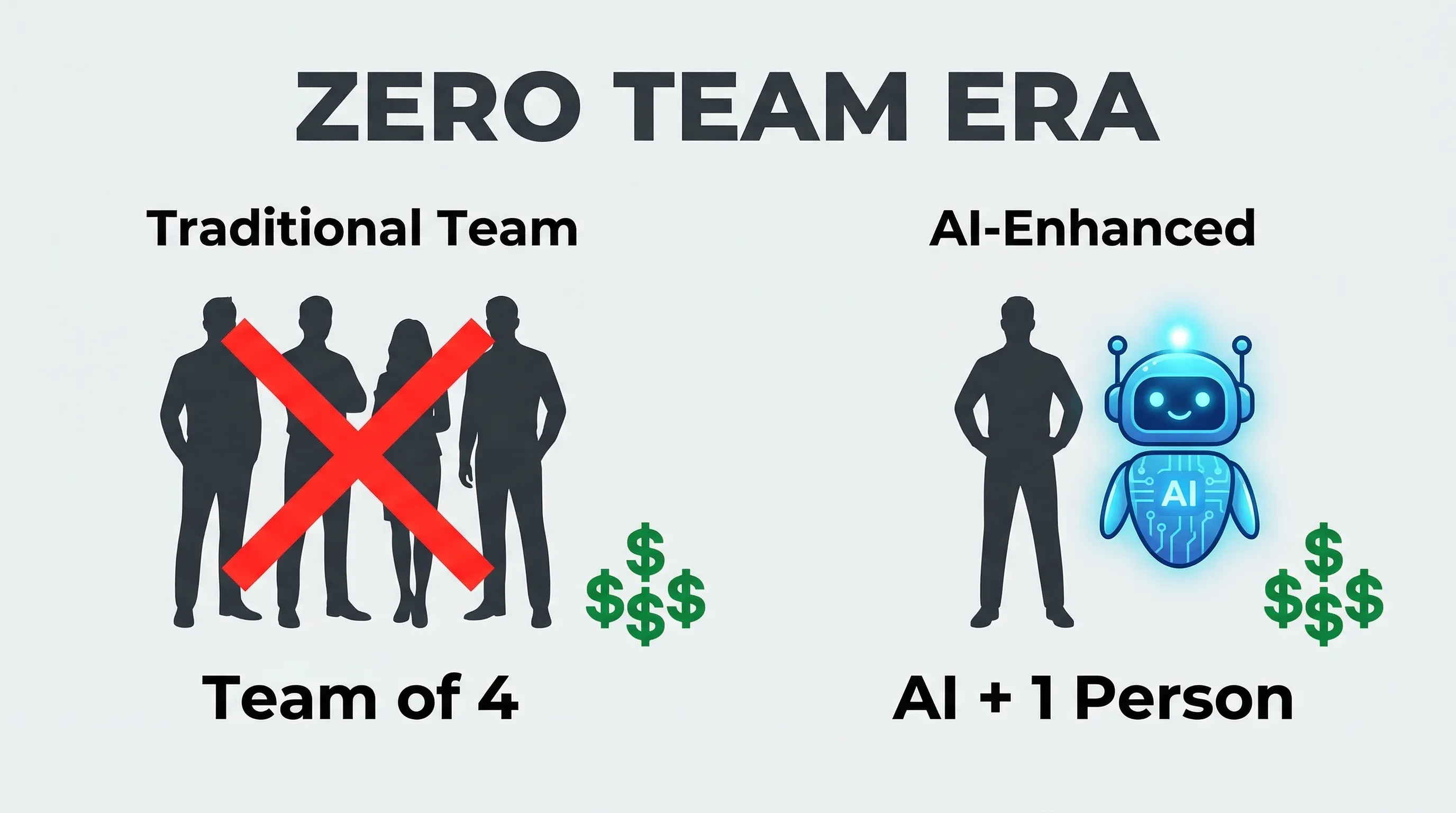
Building a stop-vaping app used to require a four-person team at $100-200K per person per year — completely unfeasible for a small app with uncertain revenue. Now, one person with an idea can use AI tools to get a product to 95% completion.
“Apps that couldn’t have existed before — they exist now because you don’t need anybody to build them anymore.”
Shaan asked if these founders were technical. Pat said many aren’t — his channel’s founders tend to be twenty-somethings, some with minimal coding skills, building entirely with AI tools.
Pat shared an early iPhone-era story for contrast. Alan Wong worked in a restaurant, built an app called 5O Scanner when the iPhone first launched, and made eight figures — about $5 million a year for several years. He used the money to retire his mother. Pat said that story was one-in-a-million back then, but similar opportunities are now emerging at scale because the barrier to entry has collapsed.
He also mentioned App Mafia, a course whose founder Zach started his app business in high school. Pat said the business is now worth over $70 million.
B2B Video: The $50-100K/Month Service Business
The conversation shifted to B2B video. Pat believes video is the native language of the internet, but most companies don’t even have a dedicated role for video production.
“Big companies need to figure out YouTube, and they need to figure it out fast.”
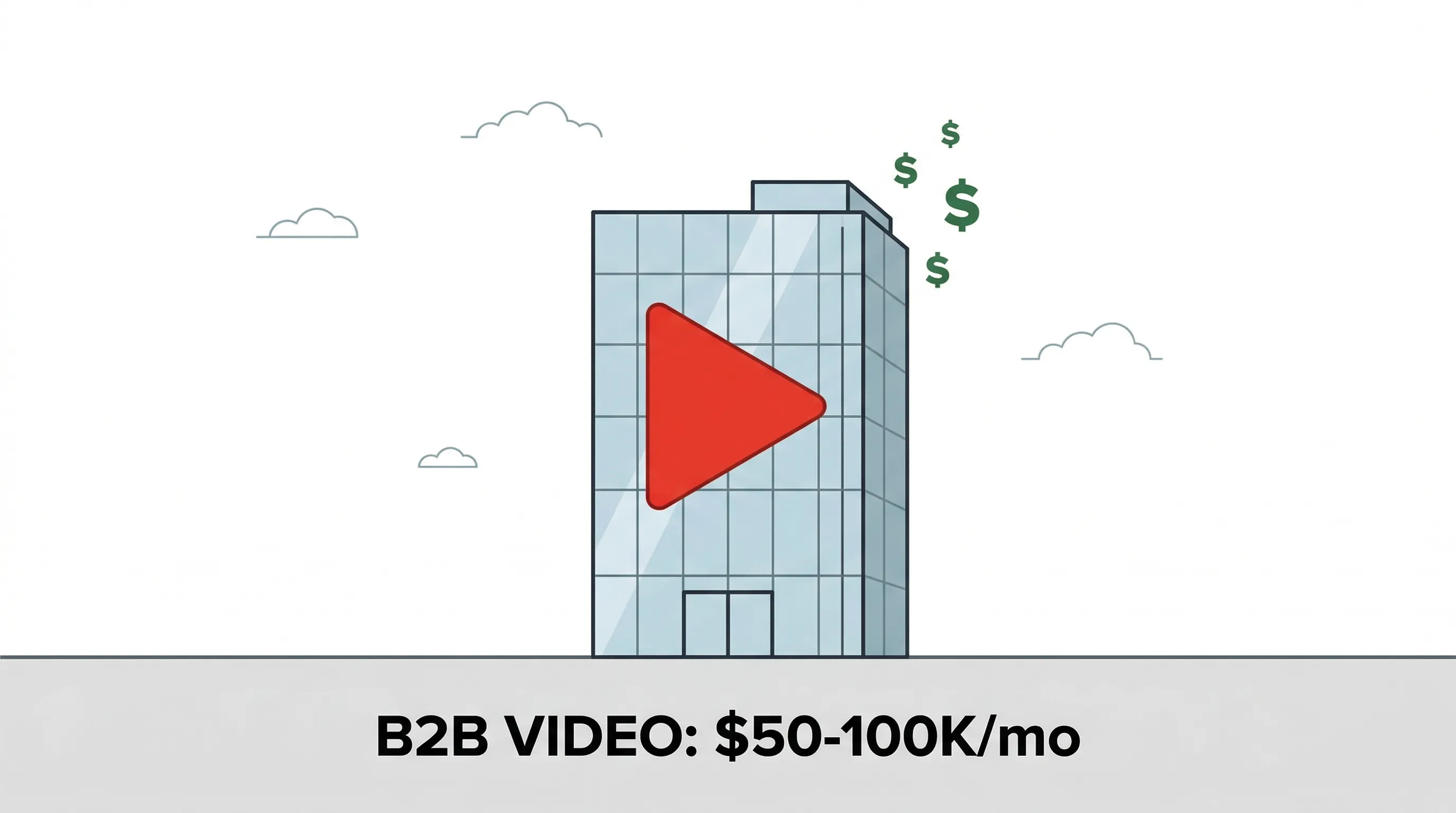
He gave an example: someone who consults for Fortune 500 companies on YouTube strategy — clients like Microsoft and Figma. He builds YouTube teams for them and sends them packaging ideas (titles and thumbnails). The fee: $50-100K per month.
Pat said this pricing shows how much B2B companies are willing to pay for video capability. And almost nobody is solving this problem.
Shaan added two more B2B video service models:
The first is a man-on-the-street interview service. A guy named Josh walks around New York stopping people to ask three fun questions, creating short-form video content for corporate clients. Shaan thinks it’s the most awkward and embarrassing video format — which is exactly why companies outsource it. Josh is expected to do $10 million in revenue this year. One format, one service, ten million.
The second is a virtual podcast service. Record a founder or CEO in a podcast interview format, but never actually launch a podcast. Cut it into short clips — it looks like the CEO hosts a show, when really they just sat down for one interview. Shaan said you only need 10 enterprise clients paying tens of thousands each to clear $100K/month.
Pat’s framework: take one popular content format and turn it into a service you sell to businesses.
The Hollywood Treatment Method for YouTube
Shaan asked Pat to show his pre-production documents for Starter Story’s YouTube channel. Pat described himself as “very anal retentive” about planning.
He shared Starter Story’s Prep Doc system. Before filming, the team creates a detailed document covering:
- Packaging: Title and thumbnail concepts (decided before anything is filmed)
- Treatment: A concept borrowed from Hollywood — when selling a script, screenwriters write a treatment explaining why the story is worth telling. Pat applied the same approach to YouTube
What Pat cares about most when writing a treatment is “how will the viewer feel after watching”:
“I like to think about the feeling that the viewer will get. Will they think about it for the next two weeks? Will they send it to a friend?”
He showed a specific example: a video about a SaaS founder, built around a Reddit post with 151 comments — a “ten-step startup playbook.” The treatment clearly stated: “The viewer will walk away wanting this exact ten-step roadmap.”
Shaan added a framework he uses: the value hypothesis and growth hypothesis from Eric Ries’s The Lean Startup. The value hypothesis answers “what value does this create for whom,” while the growth hypothesis answers “how do more people find it.” Pat’s growth hypothesis was: put founder stories on YouTube, and the algorithm will keep pushing them.
“If you get both of those right, you just have to be an idiot to not get the money part right at the end.”
Systems Thinking: EOS and Six-Week Sprints
The topic turned to running a small company with systems. Pat said he builds his company around lots of systems.
He uses EOS (Entrepreneurial Operating System), centered around a weekly meeting called the L10 meeting. But Pat made one adjustment: he changed the “Rocks” (key goals) cycle from quarterly to six weeks.
This came from Sam Parr’s approach at Hampton. Pat finds six weeks better suited for small companies — quarters are too long and easy to lose direction in, while six weeks is just enough to complete a meaningful project.
One line from Pat resonated with Shaan:
“Busy people are the biggest losers. Because I think busy is a badge of honor.”
His point: effective operations aren’t about keeping everyone frantic — it’s about clear task assignment, running systems, and giving the founder space to think about direction.
But Shaan pushed back. He argued that systems have value, but not at every stage. Most people haven’t reached the point where they need systems — they’re still struggling to get from $1M to $3M in revenue. At that stage, you need product-market fit and a growth engine, not EOS and L10 meetings.
“Most people who watch this are pre getting 1, 2, 3 million in revenue. You don’t need systems to scale at that stage.”
“I Am My Own Greatest Obstacle”
In December 2020, Pat wrote a candid blog post titled “2020 — I Am My Own Greatest Obstacle.”
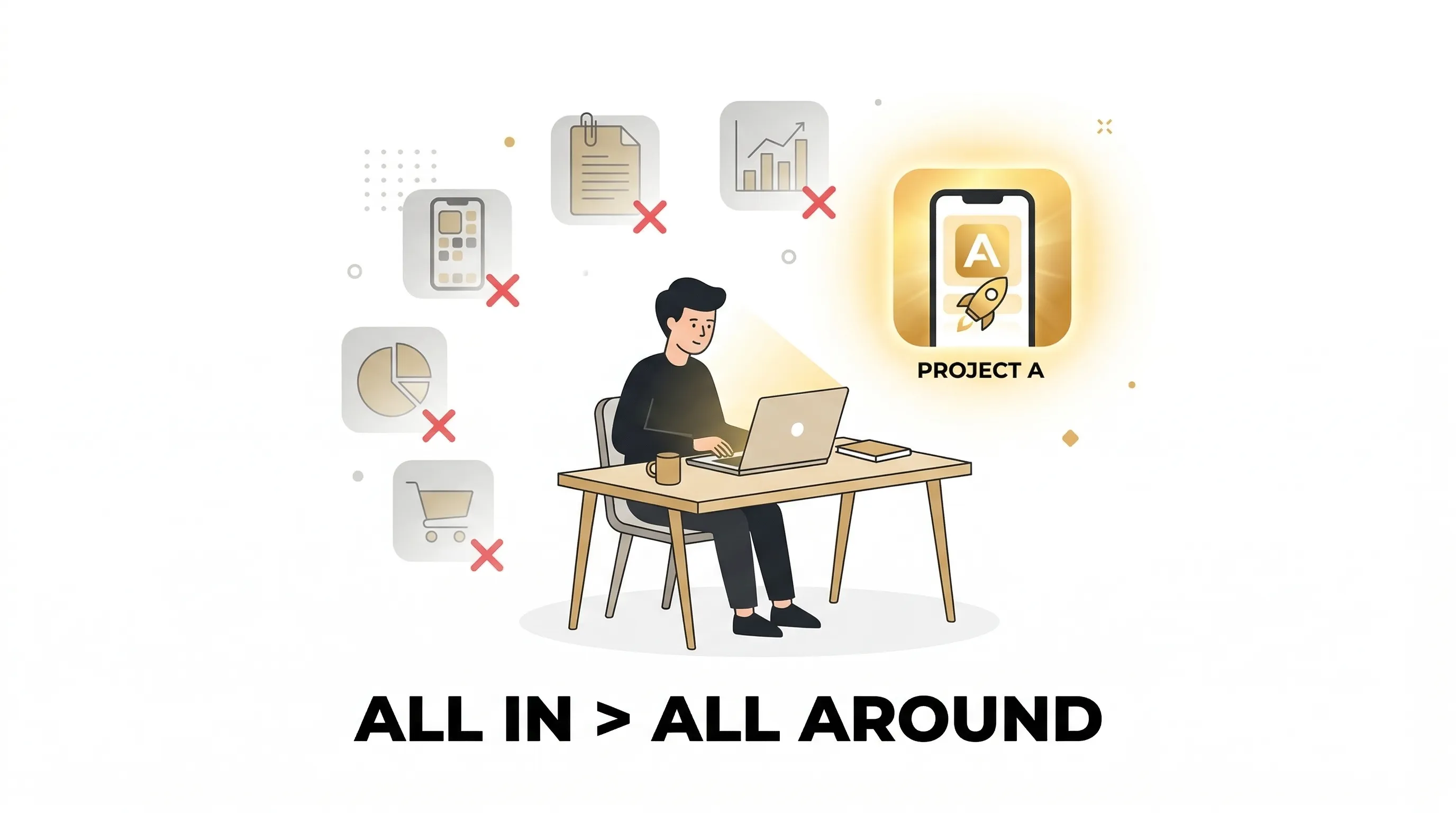
Shaan asked about the story behind it. Pat said it was during a single week in the pandemic when he realized he was spread across multiple projects, none getting his full attention. He had Starter Story plus another business. His energy was fragmented.
That week’s realization led to one decision: sell everything else and go all-in on Starter Story.
“Best decision I ever made.”
Before that point, Starter Story was struggling. Pat was living at his mom’s house because going back to a regular job was not an option. For him, entrepreneurship was less about wealth and more about freedom.
“Starting this business was more about freedom. I lived with my mom because I could not go back to a regular job. That was my main motivation.”
Within six months of going all-in, Starter Story crossed $25,000/month. Pat changed the business’s trajectory — not through a new strategy, but by putting 100% of his attention on one thing.
Editorial Analysis
Speaker’s Position
Pat Walls’s perspective comes with inherent limitations. As the founder of Starter Story — a platform interviewing founders making $10K-$100K/month — his sample naturally skews toward “solo or small-team founders reaching mid-range income.” The iOS app trend he describes may be real within this segment, but it doesn’t necessarily represent the broader tech startup landscape.
Pat also mentioned his course business and embedded ads (templates for finding business ideas). None of this invalidates his case studies, but readers should know he has commercial incentives to frame these as major opportunities.
Selectivity in Arguments
Survivorship bias: The 12 founders Pat talks to each week are already somewhat successful. Founders who used AI tools to build apps and made nothing don’t show up on Starter Story. “Half are doing iOS apps” reflects the distribution among successful founders, not the success rate among all who try.
Revenue data: Pat repeatedly mentioned “can’t disclose exact numbers” or “he told me some crazy numbers.” This vagueness adds narrative appeal but lacks verifiability.
AI coding boundaries: Pat’s claim that AI tools get you to “95% completion” may hold for simple utility apps. For apps requiring complex backends, payment systems, or ongoing maintenance, that number is likely optimistic.
Counter-perspectives
- App Store discoverability went undiscussed. Even with TikTok-driven traffic, Apple’s algorithm changes, tightening of Screen Time API permissions, and the risk of Apple cloning a feature are systemic threats to “dumb app” founders.
- The B2B video at $50-100K/month example is a classic “one person did it” story. High-ticket consulting depends heavily on personal brand and networks — hard for most to replicate.
- On EOS, Shaan himself provided the best counter: most founders aren’t at the stage where systems matter. The conversation didn’t explore what signals indicate you’ve reached that stage.
Key Takeaways
- Validate before you build. One day of video testing beats one year of development.
- Category beats creativity. “Dumb apps” in health, wealth, and productivity beat polished products in cold categories.
- Turn a content format into a service. Street interviews, virtual podcasts, YouTube strategy consulting — these are B2B service businesses, not content creation.
- All in means all out first. Pat’s turning point wasn’t a new strategy — it was cutting everything that was splitting his focus.
Source: My First Million - Dumb iPhone Apps Are Making People Rich Again | Summary: AI-assisted
If you found this helpful, consider buying me a coffee to support more content like this.
Buy me a coffee