Peter Steinberger: The Value of Code No Longer Matters — What Matters Is Your Intent
Guest: Peter Steinberger (OpenClaw creator, former PSPDFKit founder) Host: Romain Huet (OpenAI Head of Developer Experience) Show: Builders Unscripted Ep. 1 Duration: 31 minutes Source: YouTube Full Transcript: Full transcript with speaker identification
Peter Steinberger is an Austrian developer who created PDF framework company PSPDFKit in 2011, ran it for 13 years, and sold it. After experiencing severe founder burnout, he started building with AI tools in 2025, creating over 120 projects on GitHub (90,000 contributions), culminating in OpenClaw — an open-source personal AI agent platform that runs on your own computer, communicates through WhatsApp, Telegram, or Discord, and has access to your files and tools. OpenClaw made the Wall Street Journal within weeks of its release.
This video was recorded before Peter joined OpenAI. Here are the parts I found most worth paying attention to.
The Goosebumps Moment
Peter’s AI awakening wasn’t gradual — it was sudden.
He took a half-finished project — one he’d abandoned due to burnout — packaged it into a 1.5 MB Markdown file, fed it to Gemini Studio to write a spec, then handed the 400-line spec to Claude Code.
“One hour later it actually worked — I had goosebumps. My head exploded with all the things that I always wanted to build that I just couldn’t before, and I couldn’t really sleep anymore.”
This path is highly representative: not convinced by an article, not moved by a talk, but handing a half-finished thing to AI and watching it complete the work. The goosebumps moment is essentially the feeling of capability boundaries suddenly dissolving.
Many people haven’t experienced this moment yet. That’s why they don’t truly understand what AI is changing.
9 Months Behind the “Overnight Success”
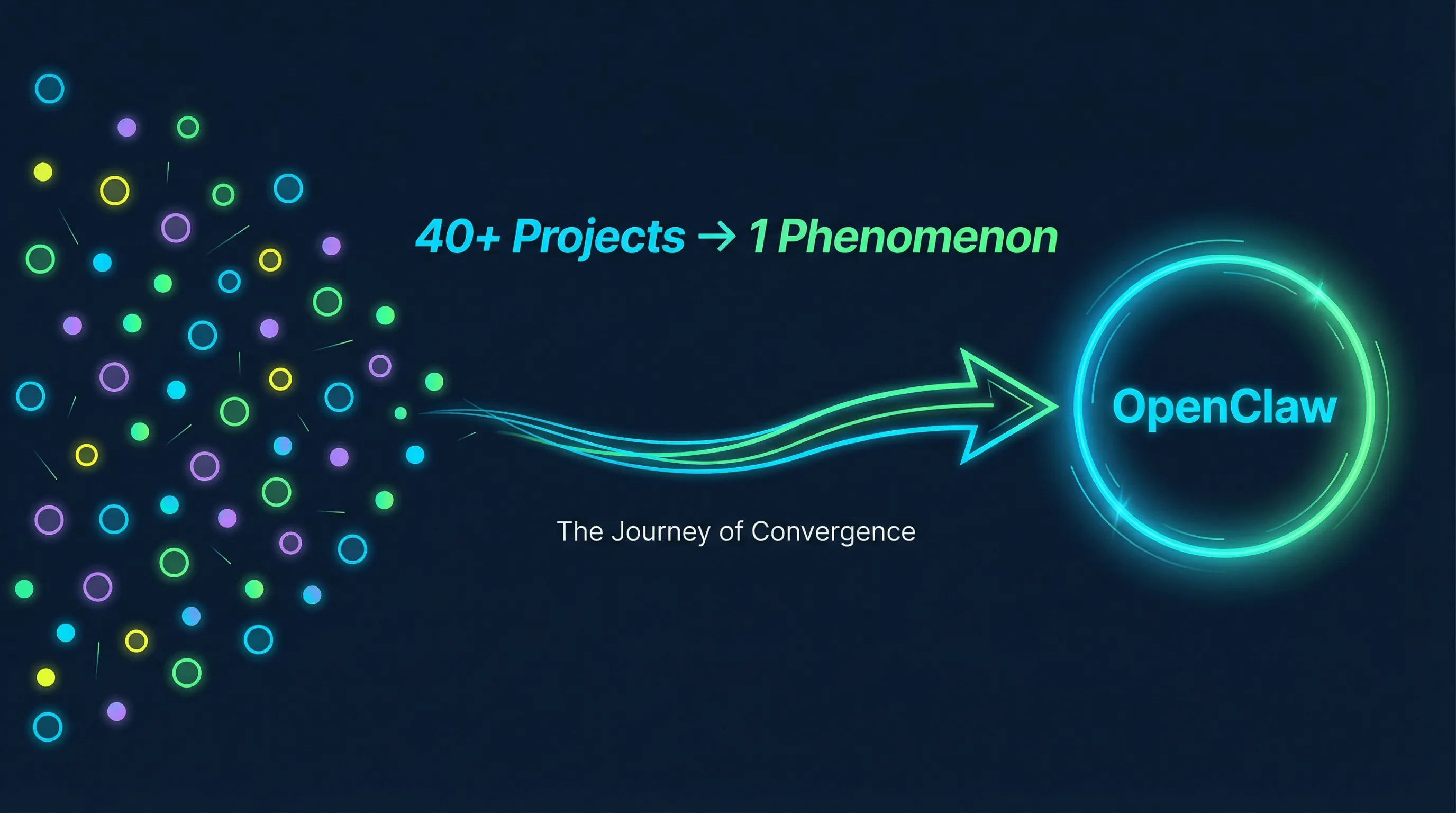
OpenClaw looks like an overnight explosion. But Romain counted 40+ projects on Peter’s GitHub, half of which were integrated into OpenClaw.
“I didn’t have a unified plan. A lot of things were explored — I wanted something that didn’t exist, so I just prompted it into existence.”
This has two layers of meaning. First, as a creative methodology: not plan-then-build, but build-then-discover. Second, and deeper: previously “wanting something that doesn’t exist” meant you had to build it yourself, taking weeks or months. Now you just need to describe it clearly and prompt it into existence — the first prototype might take an hour.
The turning point came in Marrakesh. Peter went for a weekend trip and found himself using his WhatsApp bot constantly — translating signs, finding restaurants, looking up things from his computer. His friends all wanted it. But he said “it’s too dangerous, not ready yet.”
When your friends want something you haven’t even intended to share — that’s the earliest signal of product-market fit.
The Agent That Saved Itself with FFMPEG and curl
Then something more interesting happened. Peter sent a voice message to his bot — a feature he had never programmed.
“The model said: you sent me a file with no file ending. So I looked at the file header and found it’s Opus. I used FFMPEG to convert it. Then I wanted to transcribe it, but didn’t have Whisper installed. So I found an OpenAI key and used curl to send the file to OpenAI and got the text back.”
This story matters not because of technical complexity, but because it describes a new relationship: you set the intent, the model finds the path. What Peter said afterwards is even more notable — “one person couldn’t have built this.” He’s not just talking about code volume. He’s talking about this emergent problem-solving behavior that humans can’t pre-plan into a system.
The same creativity showed up in another scenario: Peter created a nearly empty Alpine Linux Docker container and asked the model to access a website. No curl, no nothing. The model found a C compiler, built its own HTTP client using TCP sockets, and actually made it work.
The Agentic Trap
Peter had 90,000 GitHub contributions across 120+ projects in the past year. When asked how he’s so productive, he first corrected a popular misconception:
“They call it ‘vibe coding’ — I think vibe coding is a slur. AI is a skill. You pick up the guitar, you’re not going to be good on the first day.”
Then he described a universal trap he’s observed:
“I call it the Agentic Trap — there’s a gap between when you first encounter new technology and when you actually become productive with it. A lot of people get stuck over-optimizing their tool setup.”
This observation is extremely accurate. The “Agentic Trap” describes a broader phenomenon: people treat AI as a tool to be configured, rather than a partner to build a collaborative relationship with.
Peter’s method is dead simple: talk to the model like a conversation, always ask “do you have any questions?”, keep the mental model in your own head and guide the model to see the big picture. No worktrees, just checkout 1 through 10. No fancy config, just the basics. He says Codex has his highest trust, and GPT-5.2 was another quantum leap.
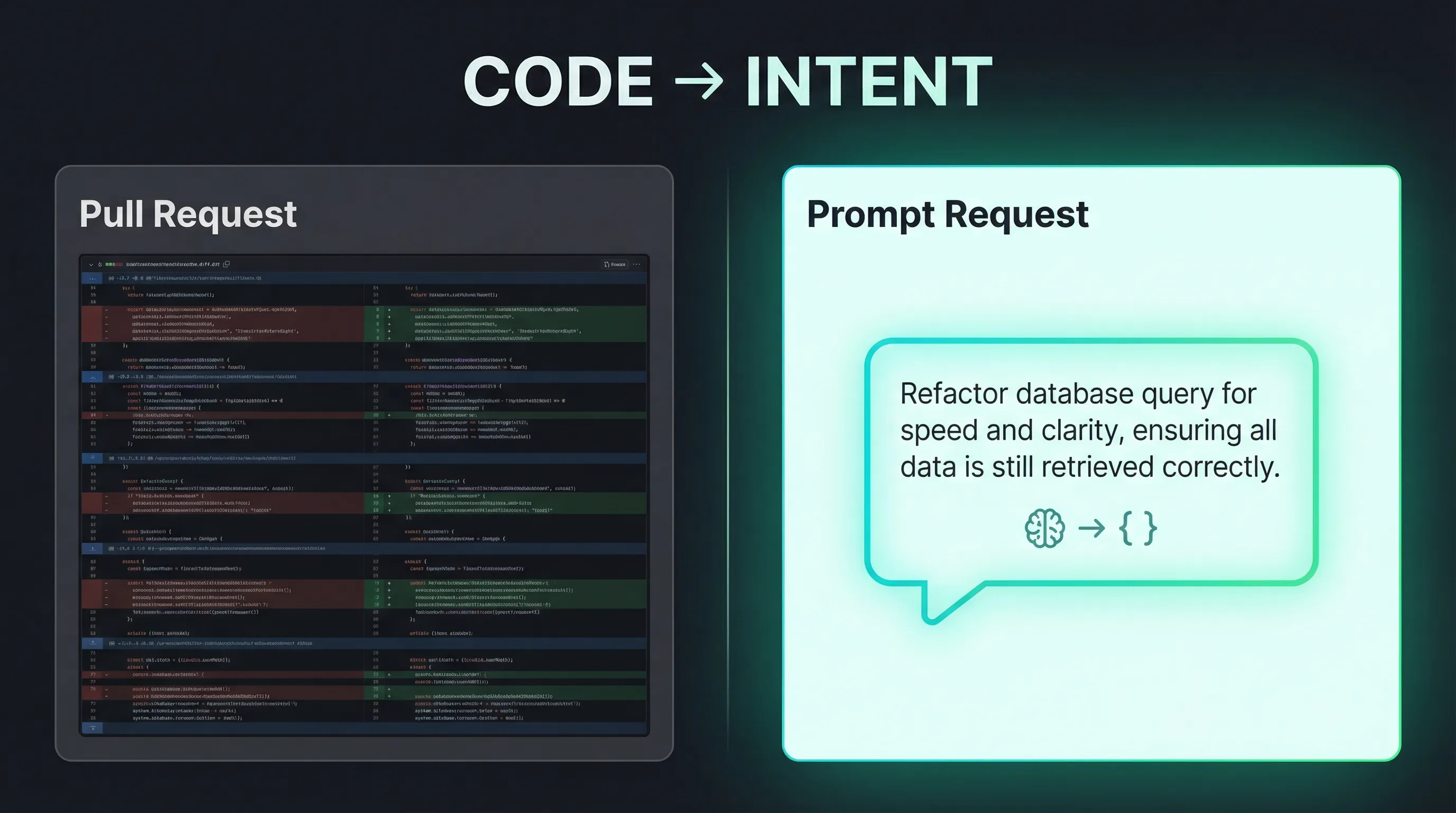
PR Is No Longer Pull Request — It’s Prompt Request
This is the most radical insight in the entire interview.
OpenClaw has 2,000 open PRs. Peter’s review process has completely changed:
“When reviewing a PR, my first question to the model is: do you understand the intent of the PR? Because I don’t really care about the code. I care about what the person is actually trying to solve.”
He doesn’t even call them Pull Requests anymore — they’re Prompt Requests. What matters is intent, not code.
His typical PR review flow: voice-chat with the model for 10-15 minutes, analyze intent, explore optimal solutions, determine whether it’s a local fix or an architectural issue. When satisfied, one slash command (land PR) handles everything.
This means the software engineering value chain is being restructured. The most expensive thing used to be implementation ability. Now it’s judgment — knowing what to build and what not to build. And that’s precisely where humans remain irreplaceable.
Optimize Your Codebase for Agents
“Most code is boring. You should optimize your codebase for agents, not humans.”
The lesson Peter learned from managing teams — accepting that others won’t write exactly the same code as you — now applies to human-AI collaboration. He doesn’t read every line the model writes. Mental model alignment matters more than line-by-line review.
More radically, OpenClaw’s design means the agent sits in the source code. If you don’t like something, you prompt the agent to change itself — truly self-modifying software. This is why people who never submitted a PR before suddenly started submitting PRs.
This points to a dizzying trend: the primary reader of software is shifting from humans to AI. Comments, naming conventions, code structure — conventions that existed for human collaboration — their primary audience is quietly switching.
Play. Build What You’ve Always Wanted to Build.
Romain asked a direct question: many European developers haven’t embraced agentic tools yet. What’s your advice?
“Approach it in a playful way. Build something that you always wanted to build. If you’re at least a little bit of a builder, there has to be something on the back of your mind. Just play.”
Peter quoted Jensen Huang — “you won’t be replaced by AI, but by someone who uses AI” — then added his own layer:
“But if your identity is ‘I want to create things, I want to solve problems,’ if you’re high agency, if you’re smart, you will be in more demand than ever.”
These two statements don’t contradict each other. It’s precisely because AI is a skill worth seriously learning that you can truly enter “the best time to be alive” — Peter’s words from the opening of the interview.
Based on OpenAI Builders Unscripted Ep. 1
If you found this helpful, consider buying me a coffee to support more content like this.
Buy me a coffee