Pieter Levels: One Person, 40 Projects, One Laptop — An Indie Hacker Philosophy
Guest: Pieter Levels — Indie Developer, Digital Nomad, founder of Nomad List / Photo AI / RemoteOK Source: Lex Fridman Podcast #440 | Duration: 3:43:34 Full Transcript: Complete transcript with speaker identification
Introduction
Pieter Levels is an unavoidable name in the indie internet startup world. He single-handedly designed, coded, launched, and operated over 40 startup projects. Photo AI generates over $100K monthly, Nomad List has been profitable for nearly a decade, and RemoteOK hit $140K/month during the 2021 remote work boom. He has lived and worked in over 40 countries and 150+ cities, with his entire kit being a MacBook and a backpack.
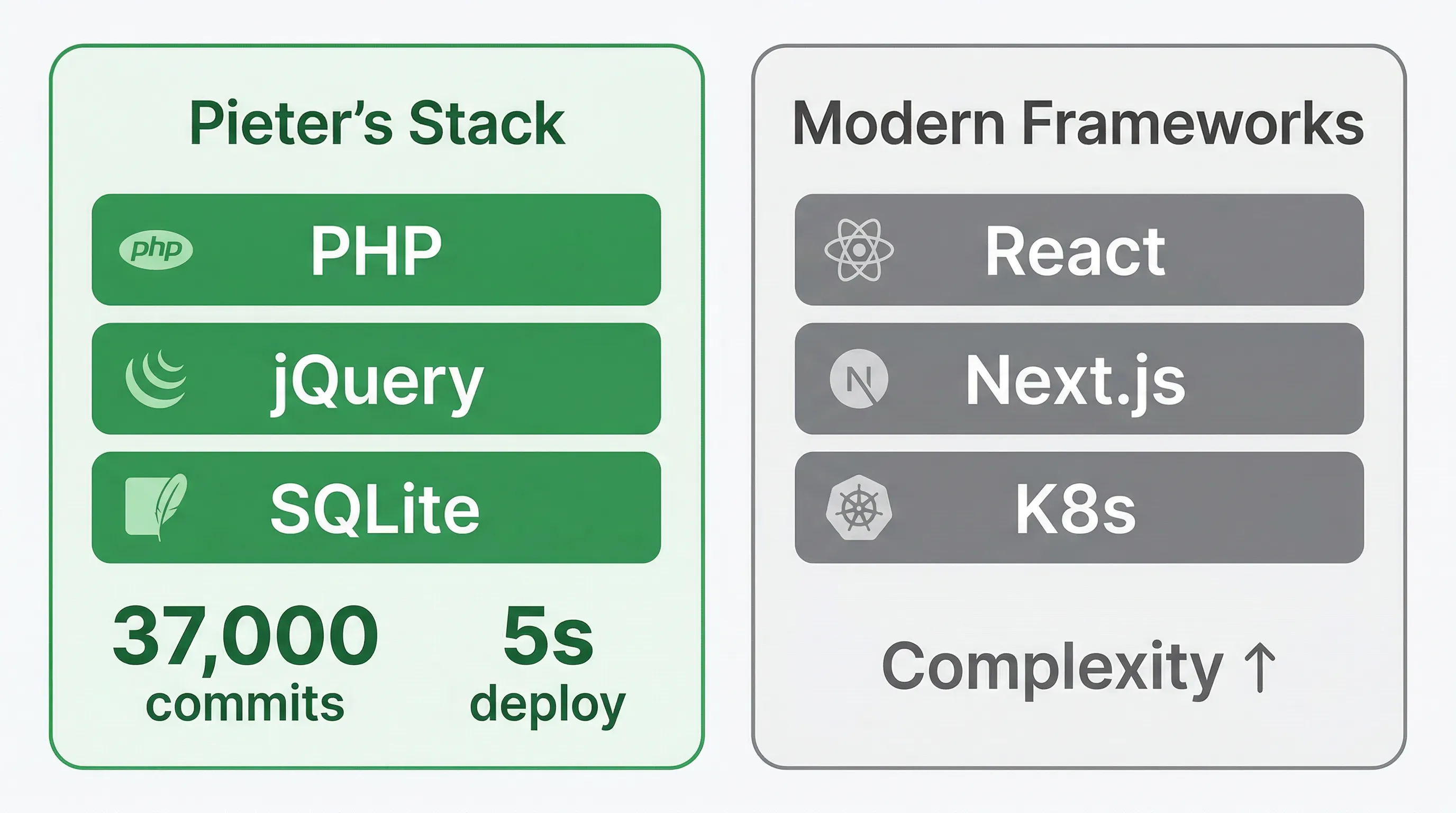
His tech stack is PHP, jQuery, and SQLite. No React, no microservices, no Kubernetes. He doesn’t raise funding, doesn’t hire employees, doesn’t use staging environments — he deploys directly to production. Last year he made 37,000 git commits.
This podcast episode is a nearly four-hour conversation between Lex Fridman and Pieter. Pieter doesn’t shy away from failure and low points — he candidly describes the despair of staring at a hostel ceiling at age 27, while also breaking down every engineering detail of Photo AI’s journey from NSFW models to six-figure monthly revenue.
Highlights:
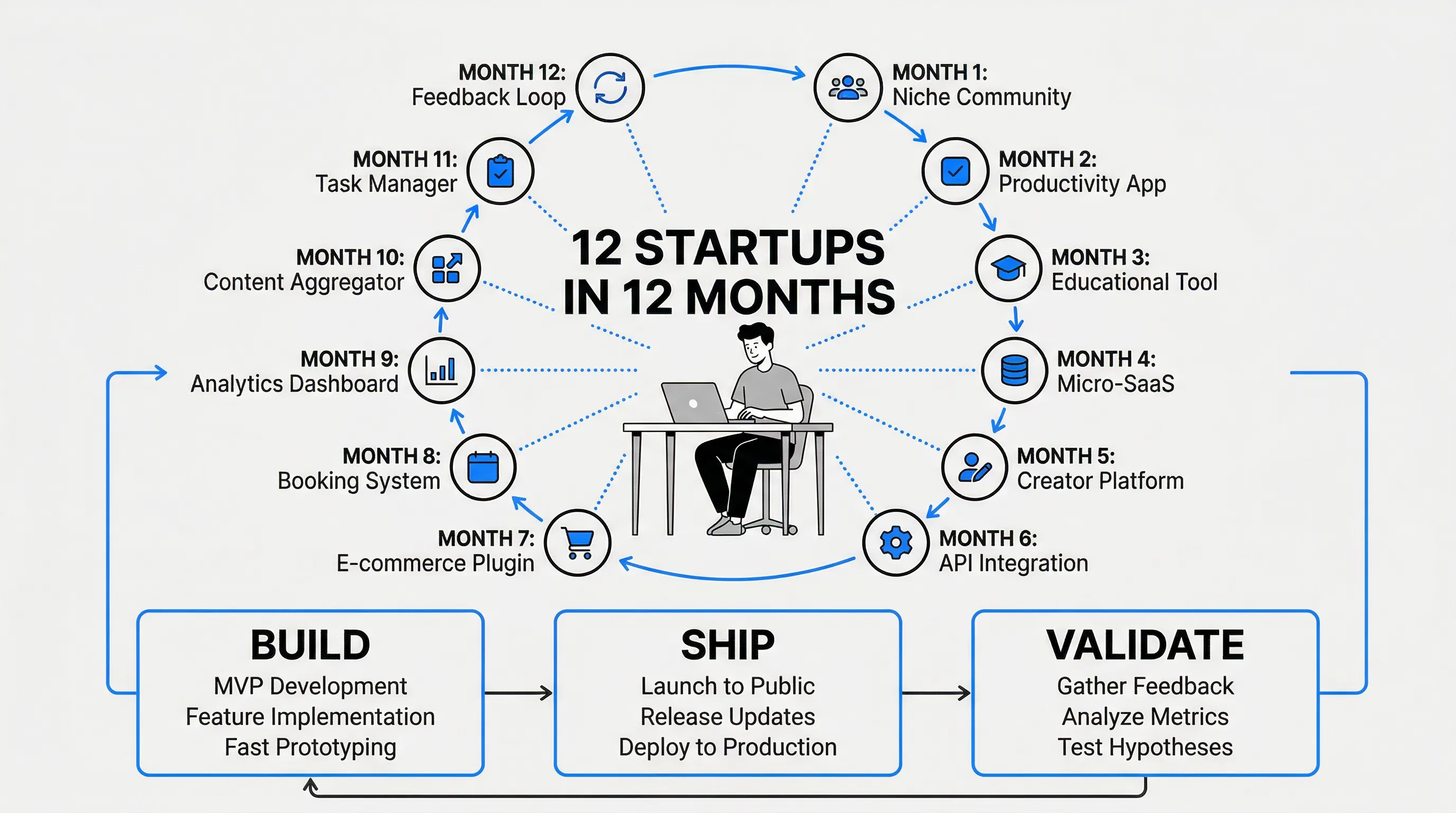
- 12 startups in 12 months — fighting depression by “shoveling sand”
- Photo AI’s origin: manually emailing photos to the first 100 customers, then being forced onto Replicate when his GPU provider jacked up prices
- The “framework industrial complex” — a sharp critique of frontend framework marketing
- A decade of digital nomad life: the flip side of freedom is being lost
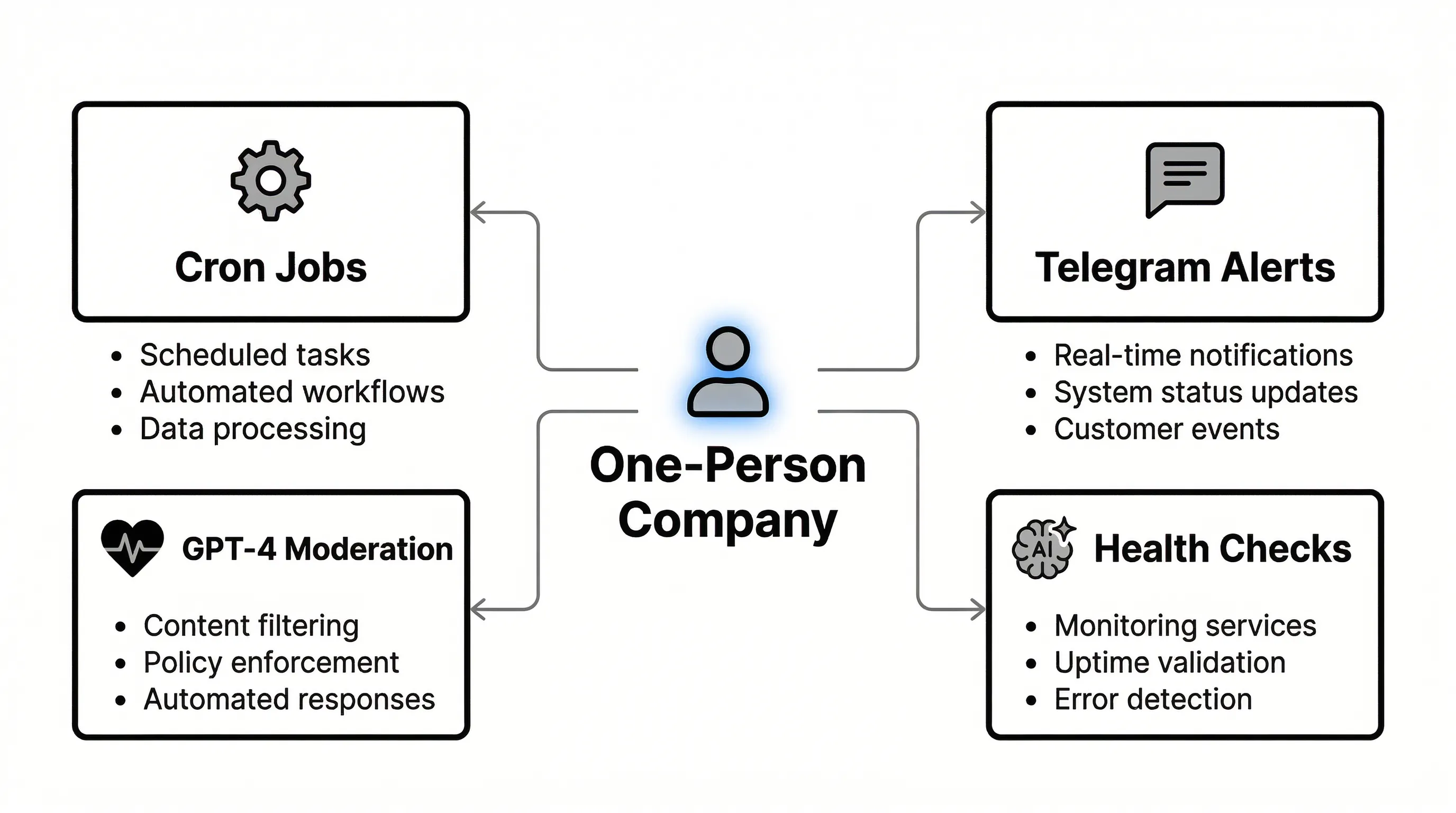
- The limits of a one-person company: automating nearly everything with cron jobs and GPT-4
- Twice giving away all possessions, keeping only a backpack and MacBook
From the Couch to the Other Side of Unicorns: A Solo Startup Methodology
Pieter Levels’ entrepreneurial career started from a low point. At 27, he graduated from a Dutch university, earning $2,000/month from a YouTube music channel. While his friends were landing proper jobs, he flew to Asia to start the digital nomad life — only to become more anxious. Alone in hostels staring at the ceiling, his bank balance shrinking to $500/month.
His father gave him advice that didn’t exactly sound like therapy.
If you’re depressed, get a pile of sand, grab a shovel, and start shoveling. Do something. You can’t just sit there.
Pieter translated this into internet terms: 12 startups in 12 months. Build one project each month, add a Stripe payment button, ship it, see if anyone pays. The first project was Play My Inbox — a tool that scanned Gmail for YouTube links. It didn’t make money, but tens of thousands of people used it.
His startup philosophy stands in stark contrast to Silicon Valley’s mainstream. Most founders raise capital, hire teams, search for product-market fit. Pieter codes alone in hotel rooms wearing shorts, validates an idea in two weeks, and moves on if it doesn’t work. He says his friends who’ve raised hundreds of millions privately tell him: “Next time I’m going to do it your way.”
The core of this model isn’t a romanticized lone-wolf narrative — it’s a clear economic calculation: no funding means no burn-rate pressure, no employees means no management overhead, 90% profit margins mean even tens of thousands in revenue sustains a high quality of life. Pieter calls this “building, not destination” — his father is always renovating the house, not for the result, but for the renovation itself.
Building is not about the destination, it’s about the journey.
The Truth About Digital Nomad Life: The Price of Freedom
Digital nomad life looks like laptops-on-the-beach idyll on social media. Pieter’s actual experience was closer to a psychological endurance test.
When he started this lifestyle around 2014, digital nomadism wasn’t yet a mature community. The “peers” he met in Chiang Mai, Thailand were mostly running gray-area businesses — shipping non-FDA-approved diet pills to the US, or various sketchy cross-border e-commerce operations. He wanted to read Hacker News and build real internet products, but couldn’t find kindred spirits in that circle.
The deeper problem was freedom itself.
I am free, therefore I am lost.
He quoted Franz Kafka to describe that state. No constraints means you can do anything — or nothing. Everyone thinks that sounds wonderful — you can go anywhere, do anything. But Pieter argues the opposite: constraints may be the source of happiness. When you’re disconnected from your culture, your friend circle, your daily routines, when you wake up not knowing which country you’re in, the novelty quickly transforms into anxiety.
He says he knows digital nomads who took their own lives on the road. While he hasn’t compared this with baseline population rates, his intuition is that — especially in the early days, when you’re traveling solo without community support — the psychological costs of this lifestyle are severely underestimated.
Nomad List (a digital nomad city ranking website) was born in this context. Pieter says his initial motivation wasn’t business instinct but loneliness — he needed to find other digital nomads, needed a community. The site started as a public Google spreadsheet where people crowdsourced internet speed, cost of living, and safety data for various cities. Unexpectedly, it became a sustainable business — nearly a decade old, with 30,000+ paying members and roughly 30 automatic meetups organized monthly.
Photo AI: The Accidental Path from NSFW Models to $100K/Month
The Photo AI story is a series of pivots, each building on the technical foundation of the previous one.
After Stable Diffusion (the open-source image generation model) launched in 2022, Pieter started experimenting on his MacBook. He found the model was decent at generating houses and interior designs but terrible at faces. So he first built thishousedoesnotexist.org (AI-generated house images), then Interior AI (upload an interior photo, get AI-generated designs in different styles). Interior AI quickly hit $10-20K/month and still generates $40-50K/month to this day.
Next, he tackled photorealistic human portraits. Here’s a technical detail he’s remarkably candid about: the best portrait models at the time were all trained on pornographic images, because those contained the most anatomically accurate human body details.
Everyone doing AI image startups needs to filter out nudity from their prompts. You have to keep reminding the model: put clothes on.
He built an NSFW detector using Google Vision API that filters every photo before showing it to users. Even so, occasional failures slip through — he mentions a journalist writing negative coverage after encountering inappropriate content in generated photos.
Photo AI’s early phase was extremely manual. He built an HTML page with a Stripe payment link, used Typeform for photo uploads. For the first few hundred customers, he manually downloaded zip files, manually unzipped them, manually trained models, manually generated photos, then sent them back one by one using his personal email. He says well-known tech billionaires used the service — he was terrified of messing up.
Commercial validation came fast: thousands of paying customers on day one. But automation couldn’t keep up. The bigger blow came when the GPU training platform he used saw his publicly shared revenue data and immediately raised training prices from $3 to $20. His margins evaporated overnight.
Forced into a corner, he found Replicate (an ML model hosting platform), repeatedly DM’d the founders, begging them to support DreamBooth (an AI face fine-tuning technique). Replicate initially refused — runtime was too long, not enough GPUs. But a week later they changed their minds. This decision not only saved Photo AI but also put Replicate on the map — masses of developers started building AI avatar apps on the platform.
He later introduced data-driven A/B testing: across millions of photos generated monthly, he’d randomly use different parameters (samplers, steps, schedulers) for 10% of users, then track which parameter combinations made users more likely to favorite or download photos. He says this was the key breakthrough for product quality — he still uses Stable Diffusion version 1.5 to this day, because later versions actually perform worse.

Building Fun Products with Boring Technology
Pieter’s tech stack is one of the internet’s most controversial topics. He openly admits all his products are built with PHP, jQuery, and SQLite — no modern frontend frameworks whatsoever.
He says this choice was initially “accidental” — that’s simply all he knew. When Nomad List started growing, he put “learn Node.js” on his to-do list, but never found the time because the product was growing too fast. Ten years later, that to-do item is still there.
But he later distilled an intentional philosophy from this accident.
He argues the frontend framework space has a “military-industrial complex” (his words): framework companies raise tens or hundreds of millions of dollars, pay YouTube developer influencers to promote their tech, and make novice developers believe they can’t build products without a specific framework. In reality, the hosting costs of these framework platforms are orders of magnitude more expensive than a simple VPS — that’s their business model.
His counter-example is his own workflow: edit code, press Command+Enter, git push triggers a webhook, the server automatically pulls and deploys. Live in 5 seconds. 37,000 git commits last year, each deployed directly to production. No staging, no code review, no QA. Someone reports a bug on Twitter, he times himself — fixed and live in two minutes.
Nobody is measuring developer happiness when using frameworks.
He admits this approach would be insane at a large company, but it works well for a one-person company — because he’s forced to learn “not to make mistakes.” This is another benefit of constraints: without a safety net, you become more careful.
He also introduced a concept called code empathy: when you inherit someone else’s code, you should first assume the original author is a genius, understand their thinking and style, then work within that style rather than immediately wanting to rewrite everything. He says the only time he tried hiring a developer to help, the person demanded rewriting all jQuery code in Vue.js after one week. The collaboration ended right there.
Automate Everything: The Limits of a One-Person Company
Running multiple products solo has one prerequisite: nearly all day-to-day operations must be handled by code.
Pieter’s automation system is built on several pillars. First is cron jobs — scheduled scripts. All his websites are driven by cron jobs: hourly data updates, daily ranking calculations, periodic external data sync. He says logging into the server, typing sudo crontab -e, and writing a scheduled task — that’s his automation framework.
Second is Telegram monitoring. All JavaScript and PHP errors across his websites are automatically sent to his Telegram. Any user encountering any error — he gets notified within a minute. He also built health check pages — green and red emojis showing whether various metrics are healthy, with UptimeRobot scanning every minute and alerting on red.
Third is GPT-4 automated moderation. Nomad List has a 10,000-person chat community. It used to rely on human moderators, but users would accuse them of bias. Switching to GPT-4 worked remarkably well — it understands puns and sarcasm, distinguishing genuinely offensive speech from harmless jokes. City reviews are also auto-moderated by GPT-4, with rejected reviews forwarded to Telegram for manual review.
Free users — sorry — but they’re terrible.
He has a clear stance against freemium models. Indie developers don’t have VC money to acquire and convert free users, and the abuse and support costs from free users far outweigh the benefits. His advice: charge from day one, at least $30/month — 1,000 paying users can sustain a comfortable life.
RemoteOK (a remote job board) is the extreme case of his automation philosophy. The product runs completely on autopilot: companies post jobs and pay, job seekers apply. Base job posting fee is $299, but he added various upsells — rainbow highlighting, background images, pinned placement — maxing out at $3,000-4,000 per posting. During the 2021 Fed money-printing era, the site hit $140K/month. Then the Fed stopped printing and revenue dropped to $10K. He’s matter-of-fact about it — market cycles are what they are, and the product keeps running automatically.
The Counter-Intuitive Growth Equation
Pieter never buys ads. All his products grow through organic channels: building in public on Twitter, natural spread on Reddit, and viral TikTok sharing.
Hood Maps (a city neighborhood annotation map) is the quintessential example of his growth strategy. The product lets users color-code city neighborhoods — red for tourist areas, green for wealthy areas, yellow for hipster zones. Users can also tag specific locations, spawning lots of humorous content: “I saw a guy in a fish costume get punched here,” “only attractive people are allowed to live here.”
This meme-worthy content caused Hood Maps to go viral repeatedly across Reddit and social media in multiple cities. Pieter says his map service bills hit $20,000 — first exceeding Google Maps limits, then getting charged a fortune by Mapbox. He eventually switched to open-source mapping solutions.
But Hood Maps never made a single dollar. He tried ads, sponsorships, paid features — nothing worked. His conclusion: map applications are extremely hard to monetize. Even Google Maps barely makes money. But he believes not every product needs to be profitable — some things have value simply by existing in the world.
Another growth insight came from crowdsourced data. Nomad List started as a public Google spreadsheet anyone could edit. He found that completely open editing permissions naturally produce an “immune system” — when someone maliciously edits data, other users spontaneously correct it. This spreadsheet eventually evolved into a website with a complete data pipeline, combining World Bank and UN public datasets with check-in data from 30,000+ real users.
TikTok provided yet another avenue. An AI content creator he’d never met made a TikTok about Photo AI, bringing an extra $20K/month in revenue. The creator later contacted him asking for $4,000 — Pieter considered it money well spent. He believes in the current algorithmic recommendation era, follower count no longer matters — good content gets automatically pushed to more and more people, whether you have 100 or 500,000 followers.
Minimalism and Hedonic Adaptation: After Giving Away Everything
Pieter has twice in his life given away all his possessions, keeping only pants, underwear, a backpack, and a MacBook.
The first time was around 2012. The blogosphere was into the “100 things challenge” (reducing all possessions to under 100 items). He started selling things on eBay and discovered an unexpected benefit — all sorts of buyers coming to pick up items, giving him his first close-up encounter with Amsterdam’s various social strata. The hardest thing to sell was a Canon 5D camera co-purchased with a friend — selling it meant their music video venture was definitively over.
He says the trigger for this purge was an MDMA experience. Afterward, he felt an overwhelming urge: he had to throw away everything and go somewhere. He’s not sure whether it was the drug or a decision that had been brewing internally, but the result was that he did it twice — ending up with just a backpack, free to move around the world.
He later found theoretical support in hedonic adaptation research: buy a new car and six months later happiness returns to baseline; buy a new house, same thing. Since material possessions bring only temporary happiness, why not skip the purchasing phase entirely and invest in more lasting things — creating, exercise, relationships, meaningful work?
I’m very cautious about the concept of “more.” In all aspects.
He extended this principle to work tools: one MacBook screen, no external monitors, no mouse, just the trackpad. He says he used to have a three-monitor Windows workstation but found concentrating everything on one laptop was actually more efficient — closer to the tools, faster switching.
In the conversation’s final stretch, Pieter turned to a broader topic: Europe’s entrepreneurial culture crisis. He cited a striking statistic — 80% of the EU’s top companies were founded before 1950, compared to only 36% in the US. Europe’s economy is dominated by legacy companies and regulatory capture. He says if he wanted to start an AI company in Europe today, he’d need a notary, certificates, and permits, whereas in the US you just open your laptop and start. He made “Make Europe Great Again” hoodies for this cause — initially red, then changed to EU blue because they looked too much like Trump merchandise.
Editor’s Analysis
Guest’s Perspective
Pieter Levels’ identity shapes his narrative angle: he’s an indie developer who has never worked at a large company, and his methodology is built on the premise of “one person doing everything.” When he criticizes corporate bureaucracy or the commercialization of the framework ecosystem, he’s speaking from an outside perspective — he hasn’t worked in those environments and can’t evaluate their merits from within.
His critique of the VC startup model has an interesting blind spot: he praises Elon Musk, arguing that Musk differs from VC founders because Musk “actually builds things.” But all of Musk’s companies rely on massive fundraising and thousands of employees — precisely the model Pieter himself rejects.
Selectivity in Arguments
The most obvious issue is survivorship bias. Pieter built 40+ projects, most failed, a few succeeded. He packages this as a “rapid iteration” methodology, but in reality, thousands of indie developers did similar things during the same period with none of their projects succeeding. His success comes not only from methodology but also from era timing (the 2014-2024 golden window for internet and AI startups), personal brand effects (massive Twitter following providing free traffic), and luck.
His tech stack views are also selective. PHP + jQuery can indeed build personal projects, but he doesn’t discuss team collaboration, code maintainability, type safety, and other issues that become critical at larger scales. His “deploy directly to production” approach works because of limited user volume — if Photo AI had millions of daily active users and complex payment flows, a single production incident could cost far more than the time saved.
Counterarguments
Several important counterpoints deserve mention:
- Frameworks are not an “industrial complex.” React, Vue, and similar frameworks solve real engineering problems — componentization, state management, team collaboration efficiency. Saying their promotion is commercially motivated doesn’t negate their technical value.
- One-person companies have a ceiling. All of Pieter’s products serve niche markets. If a product needs a customer service team, compliance auditing, or 24/7 reliability guarantees, the solo model breaks down.
- Revenue data verifiability. All revenue figures come from Pieter’s self-disclosure on Twitter, without third-party auditing. This doesn’t mean he’s lying, but these numbers deserve a reasonable degree of skepticism.
- Digital nomad applicability. Pieter is a childless, highly self-disciplined Dutchman with stable passive income. His lifestyle may be entirely inapplicable to people with family obligations, visa restrictions, or different personality types.
Overall, this podcast’s greatest value isn’t providing a replicable blueprint, but demonstrating a possibility — outside the ecosystem of tech giants and VC-driven startups, another path genuinely exists. But walking this path requires more than PHP and jQuery — it takes exceptional self-motivation, high tolerance for uncertainty, and some luck granted by the times.
Key Takeaways
- Validate first: Before building anything, use the simplest method possible (even a Google spreadsheet + Stripe link) to verify if anyone will pay
- Simple tech beats complex architecture: Start building with technology you already know; don’t delay shipping to learn a new framework
- Automate everything automatable: Cron jobs, GPT-4 moderation, health check pages — let code work the night shift for you
- Paid users filter quality: Charge from day one, at least $30/month — free users only bring costs
- Build in public: Share your progress on Twitter, be honest about failures — this itself is the best growth channel
- Beware of “more”: More tools, more screens, more frameworks don’t necessarily make you more productive
Based on Pieter Levels: Programming, Viral AI Startups, and Digital Nomad Life | Lex Fridman Podcast #440
If you found this helpful, consider buying me a coffee to support more content like this.
Buy me a coffee